lonetrekker

The West Highland Way at 62


96 miles of beauty, sunshine, rain, mud and slog
Glencoe, Scotland
I must be crazy, I thought
Would I do it again?
... a resounding Yes


I am not a hiker

The seed of the idea to do the West Highland Way was planted on a 2 months trip to the UK in 2019. I met a couple of ladies on a walk along the rugged but beautiful coastline of west Cornwall, between Trebarwith and Tintagel Castle. We stopped and chatted for a bit and they asked if I had done the West Highland Way (WHW) in Scotland, to which I responded I had never heard of it. Their description of their experience walking the entire trail caused me to make a mental note to check into it when I arrived in Scotland. My wife and I had just retired and the 2 month UK trip was a celebration of our new found freedom. The itinerary consisted of a roadtrip encircling the UK and Ireland, driving west from London, through the southwest of England, then on to Ireland via the Fishguard ferry crossing. From there we would drive southwest, then up the west coast into Northern Ireland and across to Scotland and the Scottish Highlands, before heading back to London via the eastern portion of England.

I fell in love with the Scottish Highlands. The weather took some getting use to as a Floridian, but I loved Fort William, its pace, its location, the surrounding areas and the trails. I was bitten by the bug to explore the surrounding mountain trails. The walks were short and strenuous at first, but became longer and less difficult by the end of the 3 weeks there.

The seed of the idea to tackle the West Highland Way, a journey from Glasgow to Fort William, through mountains and valleys along the shores of Lochs, took hold and its roots began to emerge. Tackling the West Highland Way morphed from an idea into a bucket list item.

I made plans to return the following year to attempt it in 2020, but the world was shut down because of the Covid pandemic. Four years later, in August 2023, I successfully made the attempt... I did it solo and I loved it! What I did not expect was the total enjoyment of being on my own in an environment of absolute beauty. It was almost spiritual, every breath, a breath of clarity, and every view, a thing of beauty.
The Trail

Getting Ready


Florida is not known for its mountains. Its highest point is 345ft, so it's not the best place to prepare for a 96 mile hike across the Scottish highlands. Nevertheless, I started preparing for my trip in October 2022 with a two mile walk several days per week and by January, it had increased to 4 miles per day.

I bought a new pair of hiking boots in February and began wearing them on my daily walks. By May I was averaging 5-6 miles per day interspersed with many 7-10 mile days. I realized that a lot of my initial anxiety stemmed from not knowing what 96 miles meant. The distance sounded unachievable but my daily non-stop, brisk paced walks, helped to put some context to the number. I discovered the time it took me to do a mile (~15 mins) and the walks helped me to understand what it felt like after doing 10. I knew the terrain would be much more difficult, but I concluded that I would be able to achieve longer distances at a much more leisurely pace even in much more difficult terrain. Those daily walks helped my mental readiness. I now know after successfully completing it, being mentally prepared is half the battle.

Finding Accommodation

There are many companies that will make all the arrangements including lodging and all the required logistics. I opted not to do that. I like the process of planning all the details of my vacations. The research helps me get a sense of the destination. I began looking for accommodation in late February but had difficulty finding accommodation in the right locations. I learned that the best places i.e. those close to the trail, begin filling up very early in the season. My plan was to complete the walk over 10 days, ~10 miles per day, but that quickly changed to 7 days and 6 nights, because of the difficulty finding accommodation. The change meant several 15 mile days and one 20 mile day.

Tips

Register your phone with UK's Emergency Services - Text "register" to 999. You should receive a reply with instructions to follow. This is to confirm that you want to register and that the original message wasn't sent by mistake. If you can't make a voice call, send a text to the emergency services. Texting is more likely to get through in areas where signal strength may be insufficient for voice calls.

Use a hiking app The trails are well marked but some may not be so obvious. If the trail name is not on the sign post, look for the emblem at the top. The signs could be hidden by overgrown bushes or in a location that is not readily visible. I missed a couple, but was lucky to realize it early before going too far. I used the free version of the Hiiker app as well as the one I created with google maps shown on this page. It is not as accurate as the Hiiker app (the lines may be slightly offset from the trail), but creating it gave me insight and familiarity with the route.

Pack light and get your backpack fitted properly - my back pack weighed about 17lbs and I found it made a difference when it was fitted to transfer weight to my hips instead of my back. It did not feel extremely heavy at first but began to feel a lot heavier during the longer stretches where there were more elevation changes and the path became more rocky or root bound.

Use a baggage service when necessary - I opted to use a baggage service on my 4th-7th day. I found going downhill to be much more difficult than the ascent. My back was fine, but the added weight wreaked havoc on my knees during descents.

Spend some time preparing - especially if you are not fit. The walks I did in preparation was worth it.

Get a pair of good hiking boots - and break them in before the walk.

Water and trail mix - especially water... goes without saying.

Day 1
Milngavie to Drymen

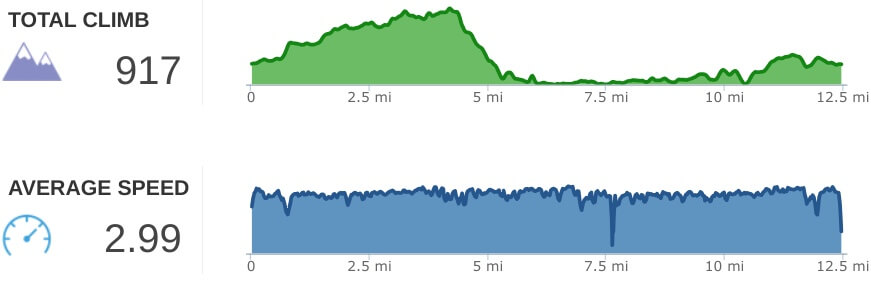
Wed Aug 2 | Start Time: 07:05 End Time: 11:15
Forecast: 64°F/53°C - Light rain
Distance: 12.47 miles | Time: 4hrs, 10mins | Speed: 2.99mph


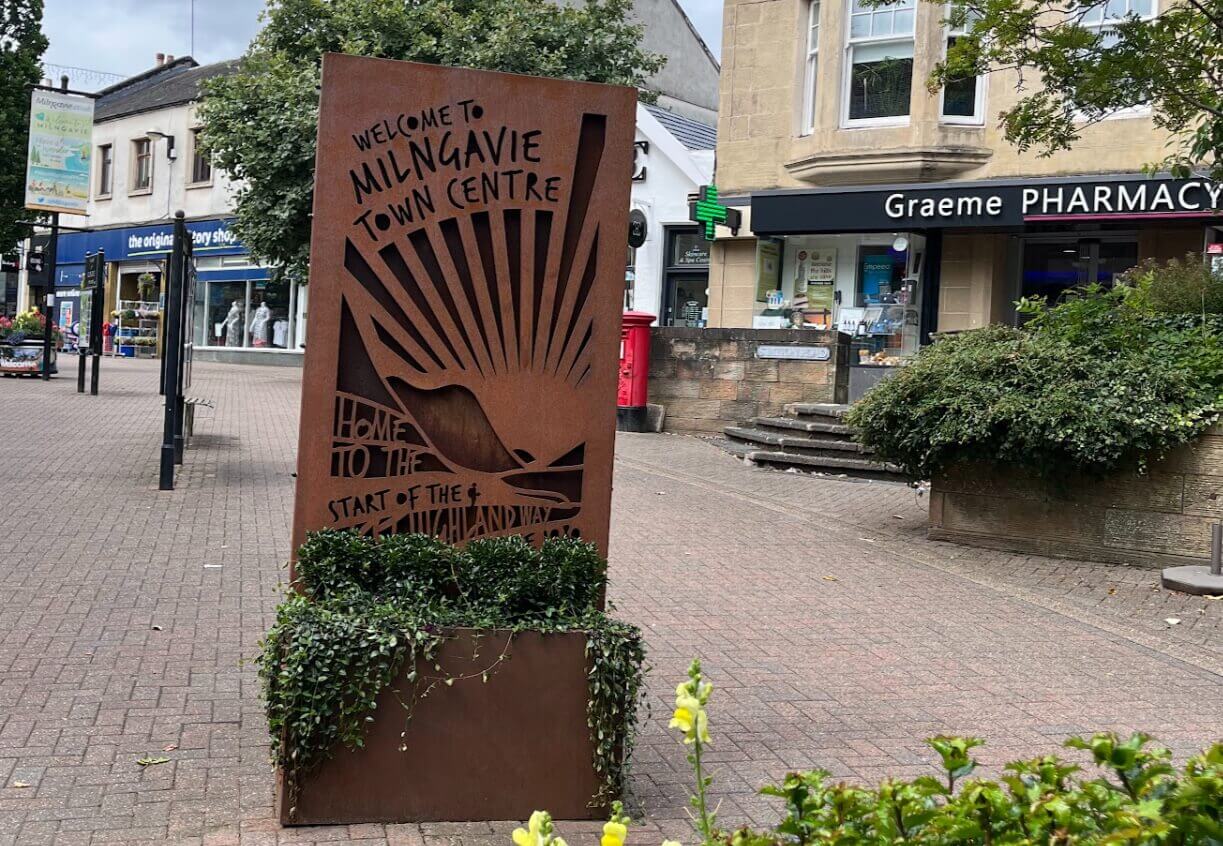
I got an early train from Glasgow to Milngavie, arriving a bit before 7am. It was a cool morning with a forecast of light rain. I knew this leg would be be a 12.5 mile over relatively gentle terrain. It was 2.5 miles longer than my longest walk while training, but I was confident I could do it.

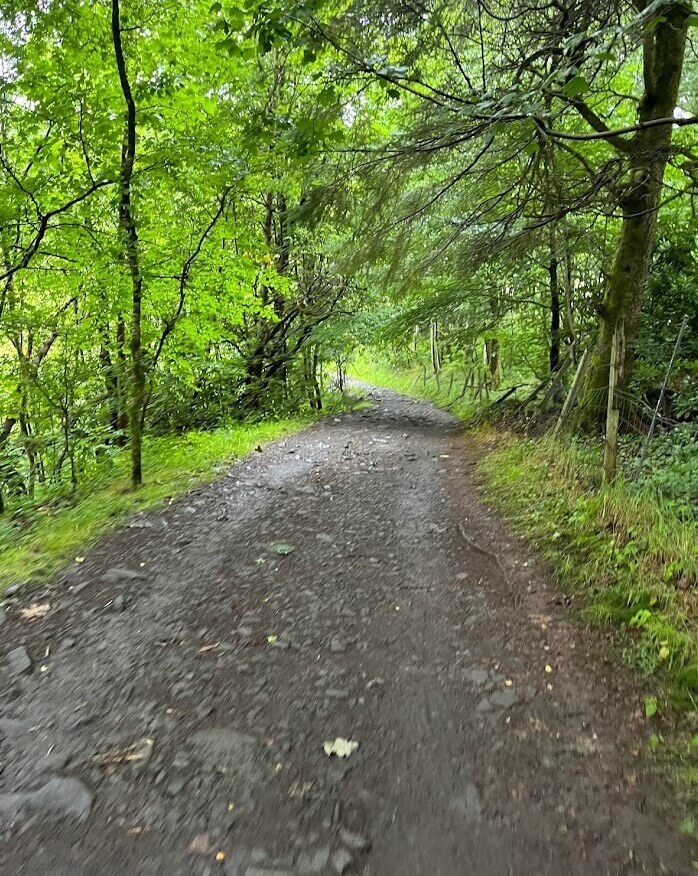
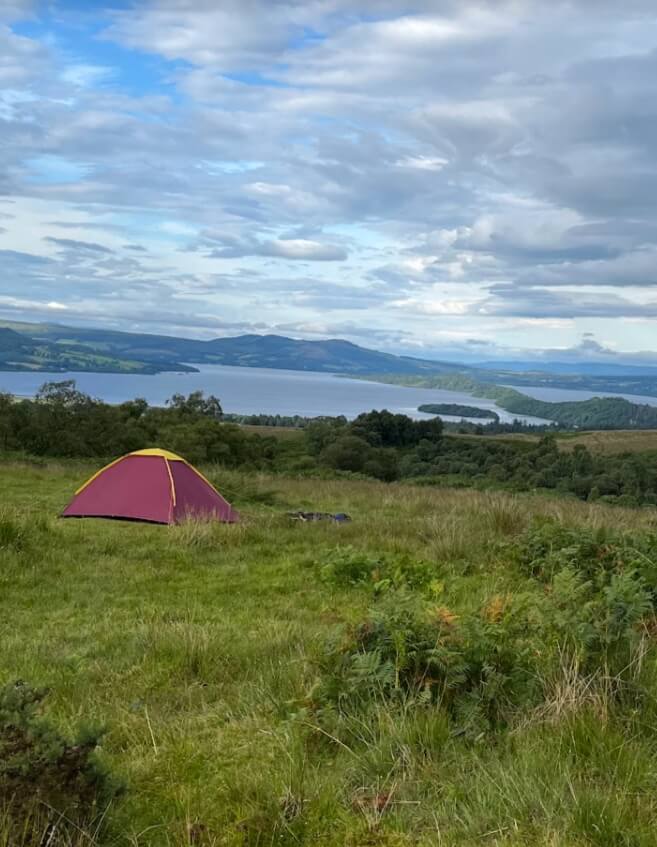
I was eager to start the walk, not knowing what to expect but also excited to discover what lay ahead. It was the start of something I had spent 4 years dreaming about. The trail leading away from the town was generally flat as it traversed tree covered woodlands, eventually opening up to open fields and farm lands. I met one lone jogger heading towards Milngavie, who appeared to be a local out for a run. Other than that, I had the trail to myself. The walk was pleasant and not particularly arduous. I passed the tent of some wild campers, but no one was in sight, probably still sleeping. It was still quite early.

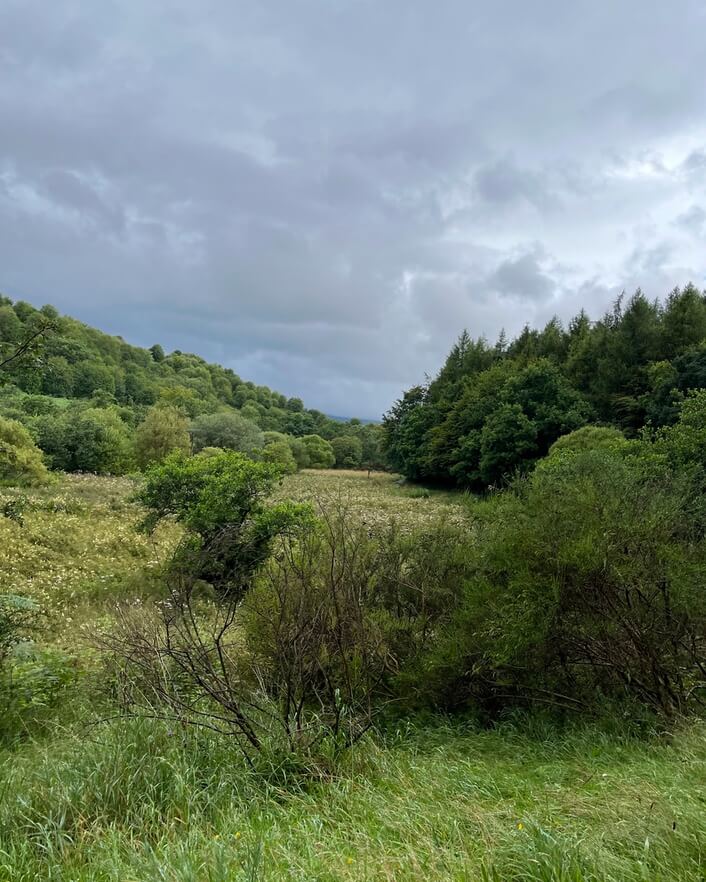
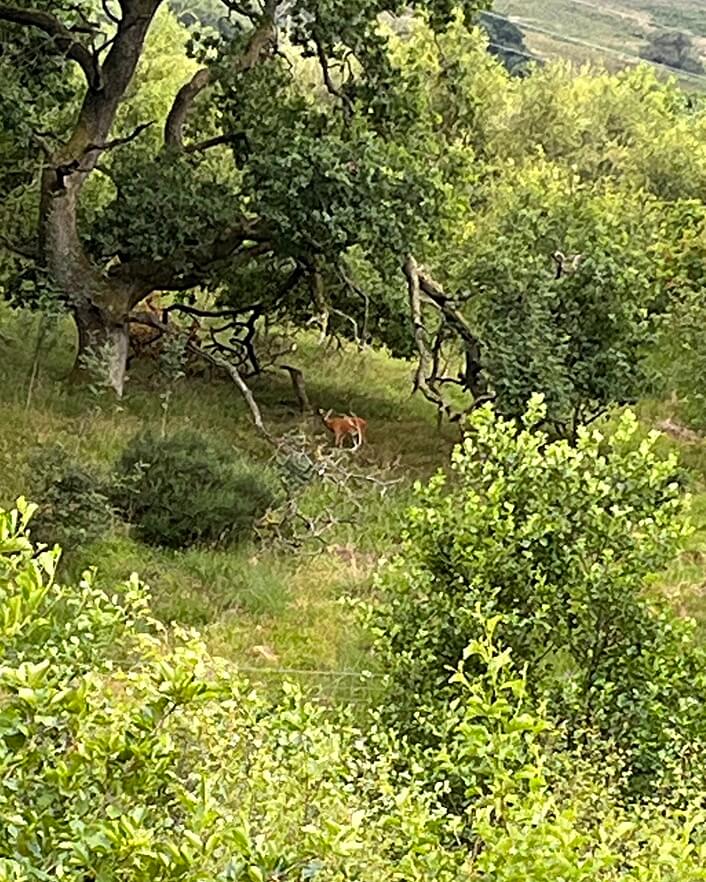
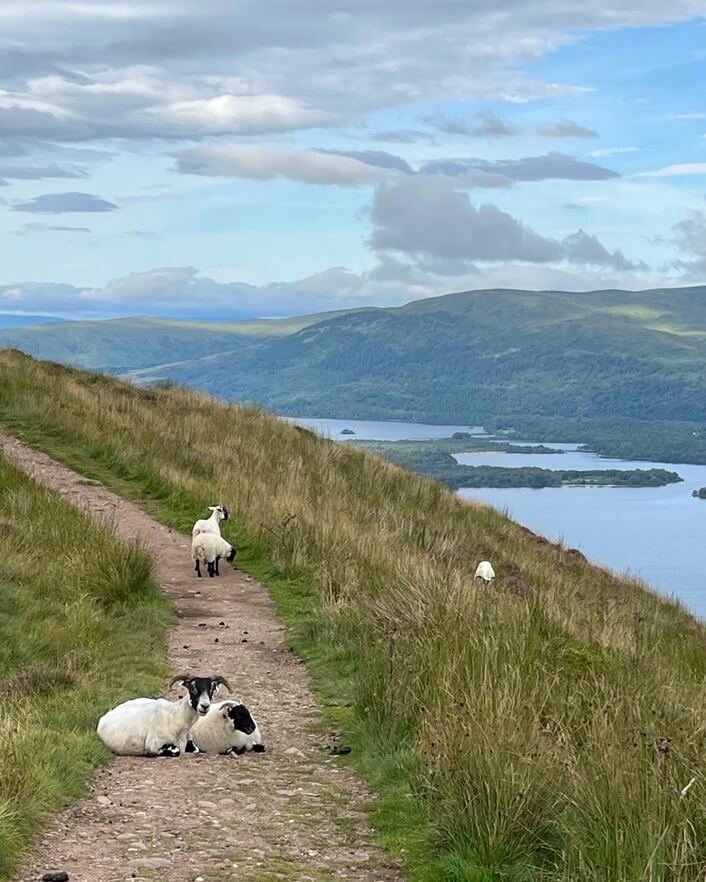
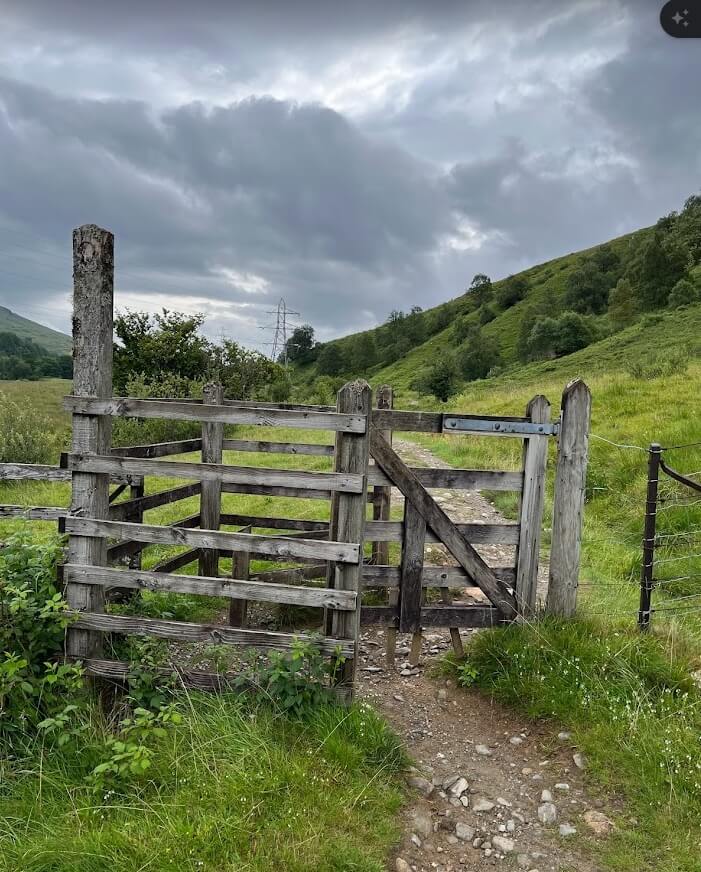
I had to pass through several turnstiles, or kissing gates that allow access, while limiting the passage of animals. The landscape was one of rolling fields, trees and rivers. There were many sheep along the way. I saw a deer in the distance, looking intently at me, assessing whether or not I was a threat.

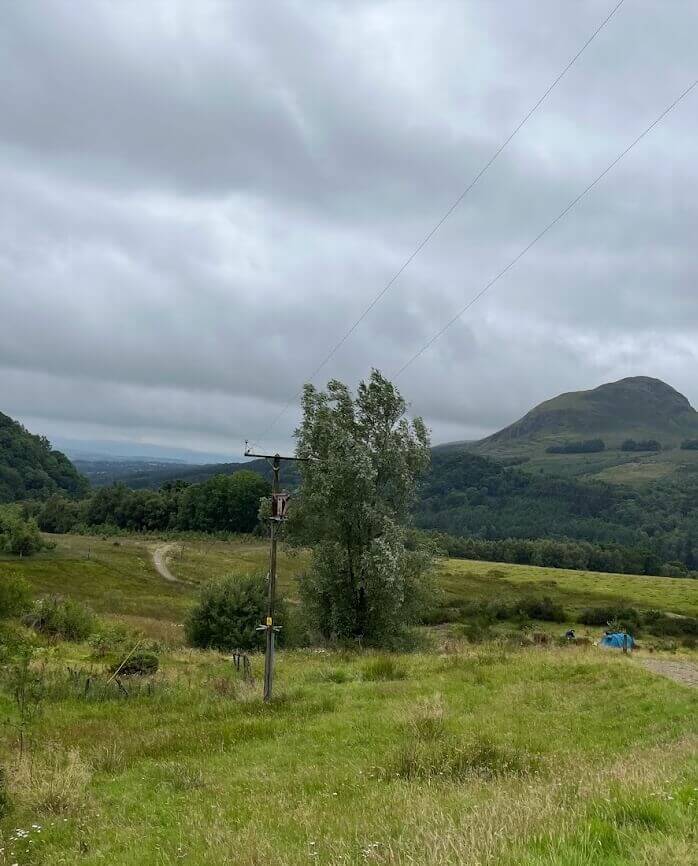
The trail was across a rolling landscape, and elevation changes were manageable. Eight miles in, there was more evidence of civilization with more farm buildings scattered around. My legs were beginning to tire so I stopped at an unexpected shop called the Turnip Beet, located on the side of the path. They sold hot food and snacks. I got a cold drink, rested my legs and chatted to the friendly proprietor, a lady about my age. She was surprised to see me this early. She explained that the trail became much busier closer to noon. I spent about 20 mins before leaving to tackle the remaining 4 miles into Drymen.

The rest of the walk ran through fields and along roads in the Gartness Rd. area on the outskirts of Drymen. I passed several "honesty boxes", something I had never heard of. I marveled at the concept and loved the spirit of trust it imbued. Locals would leave unattended stands or boxes stacked with goodies; snacks, candies, drinks and in one case, ice lollies. You pay for what you take and it is all on the honor system. What a concept. It just goes to show how neighborly and trusting the Scots are... I wish we had more of that around the world.

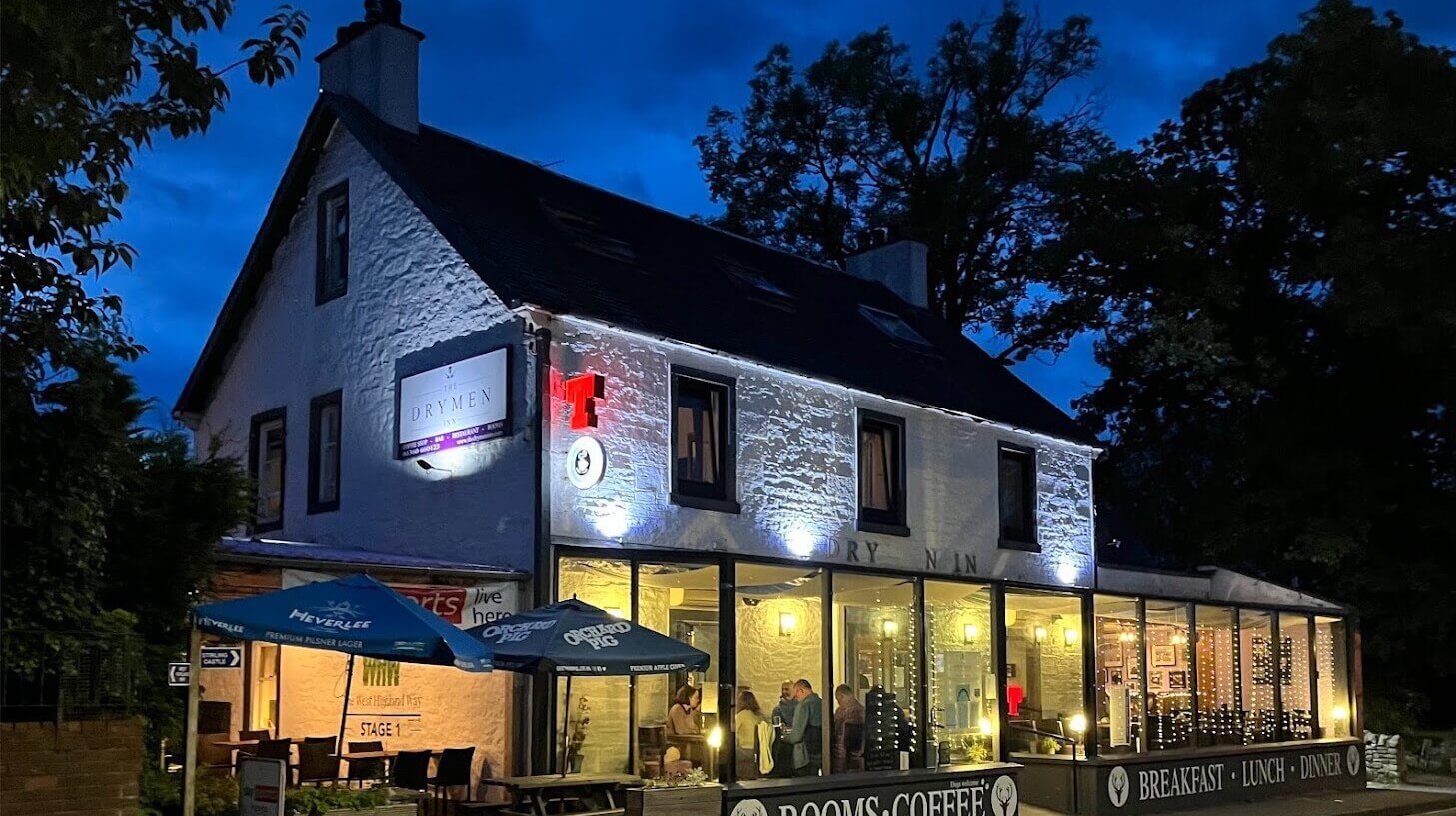
I arrived at the Drymen Inn at 11:15am where I had a reservation. They were surprised to see me there so early, they were used to walkers arriving much later. I had lunch at a table outside then walked the village square while waiting for my room to be ready.

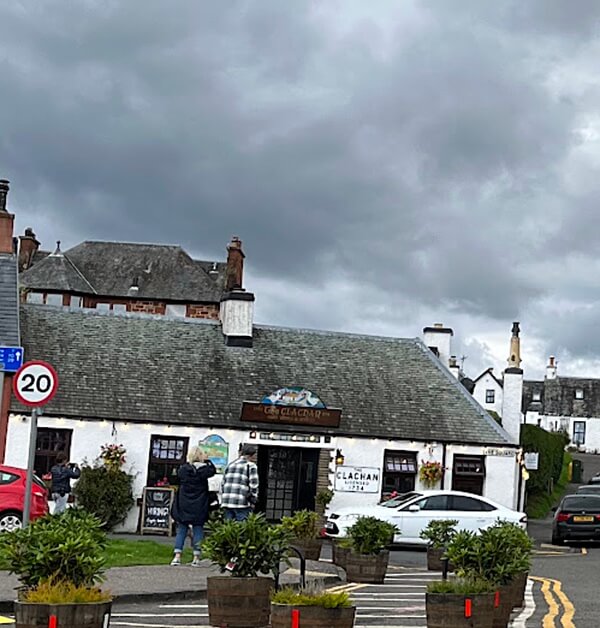
Drymen is a charming village located on the southern end of Loch Lomond. It's a popular stopping point for hikers on the WHW. The village square is quite small and picturesque, with traditional Scottish architecture. I had dinner at The Clachan, thought to be Scotland's oldest licenced pub, established in 1734. The first landlady was Mistress Gow, purported to be Rob Roy’s (possibly younger) sister. [Source: Discover Drymen]

click ../images to expand

Day 2
Drymen to Rowardennan

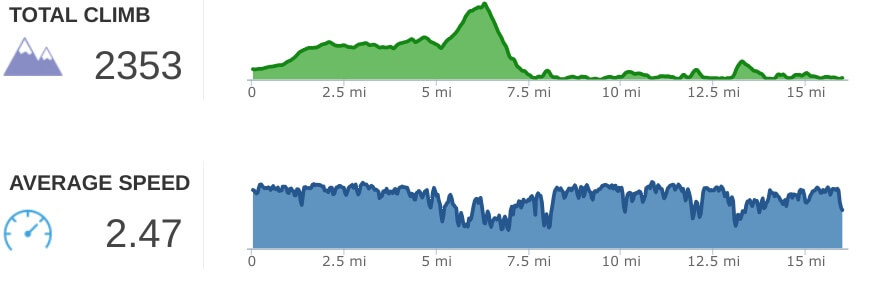
Thu Aug 3rd | Start Time: 06:49 End Time: 13:18 16
Forecast: 64°F/53°C - Overcast
Distance: 16.01 miles | Time: 6hrs, 29mins | Speed: 2.47mph


I left the hotel about 6:49am the next morning. The distance from Drymen to Rowardennan Youth Hostel is about 15 miles, but the hotel was located about a mile off the path so I had 16 miles ahead of me. I mentally mapped the walk into 3 segments; first the walk to Conic Hill, second the ascent of Conic Hill and the descent into Balmaha where I planned to stop for breakfast, then the final stretch to Rowardennan.

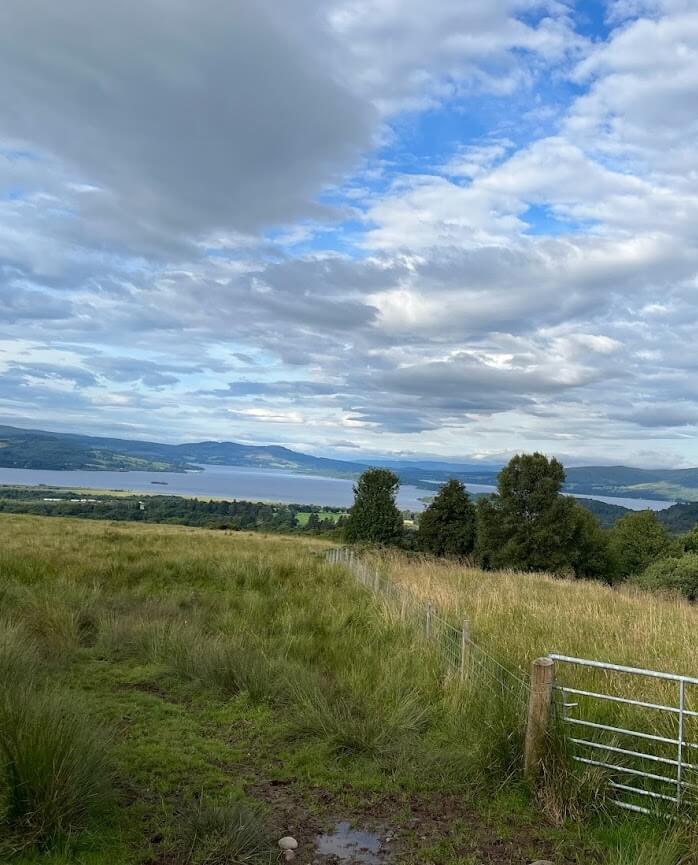
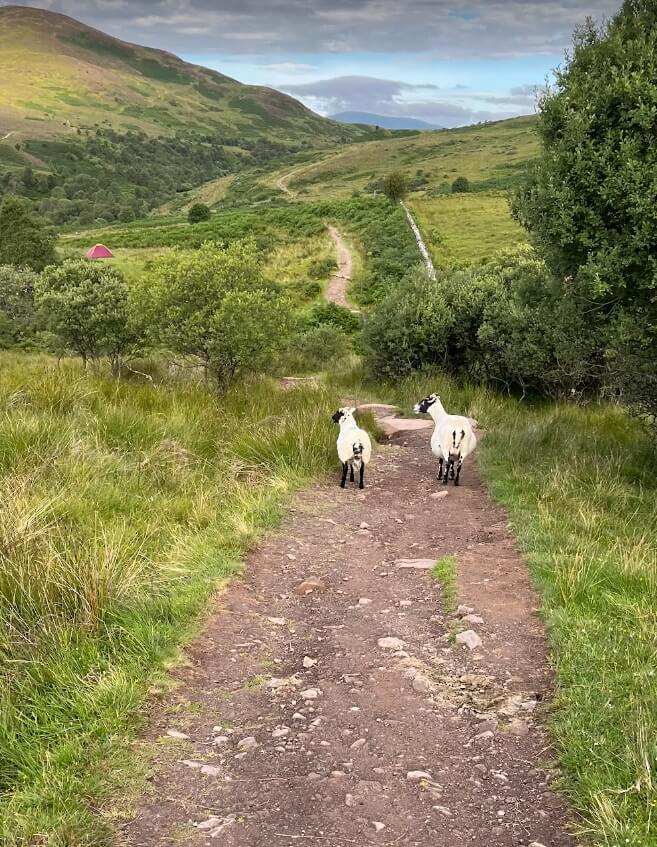
The first leg was not difficult, it took me through open fields and rolling hills. There were sheep everywhere. I got my first glimpse of Conic Hill somewhere between miles 3 and 4. From there the views became more beautiful with each step. The loch could be seen in the distance to the left and miles of open farm land to the right. I could see the trail I would take ahead of me in the far distance; a serpentine path appearing and disappearing as it traversed rolling hills making a steady ascent before disappearing behind the far side of Conic hill.

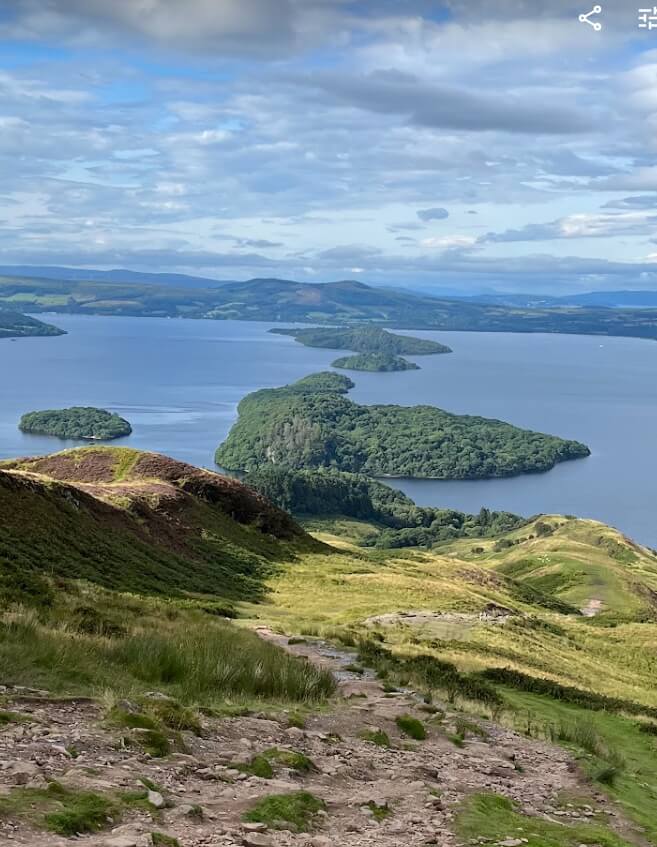
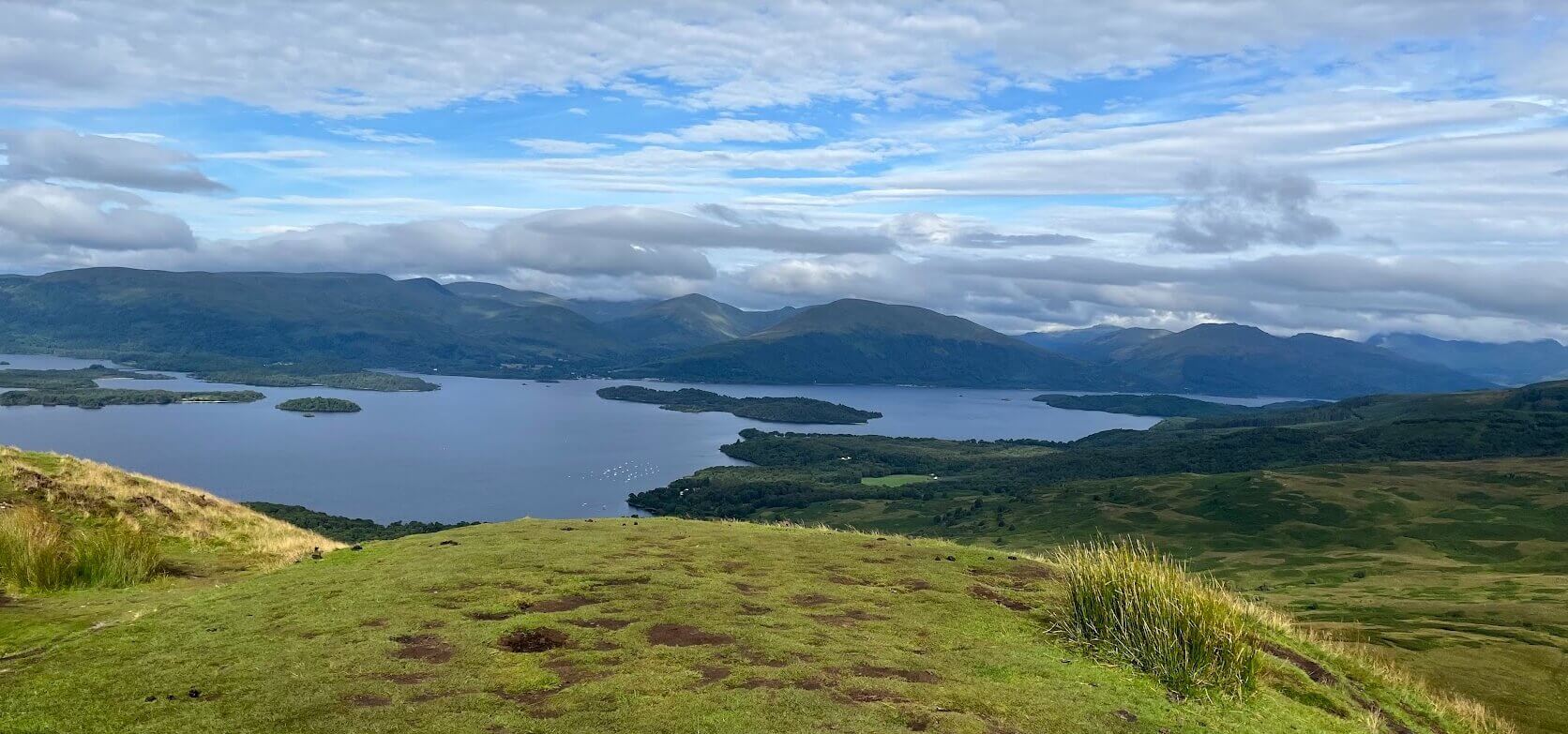
The trail takes a westerly approach to Conic Hill, with a rapid ascent as it makes its way to the north-west side of the hill. The views along the northwest side were breathtaking. I did not have much difficulty climbing, but my right knee began aching whenever I negotiated sections that went downward. I knew I was unlikely to make the trip again so decided to leave the trail and head to the summit. It was not a far walk and it was worth it. It was a beautiful day and the view from the top was a panoramic view of Loch Lomond and its surrounding areas. It was awesome.

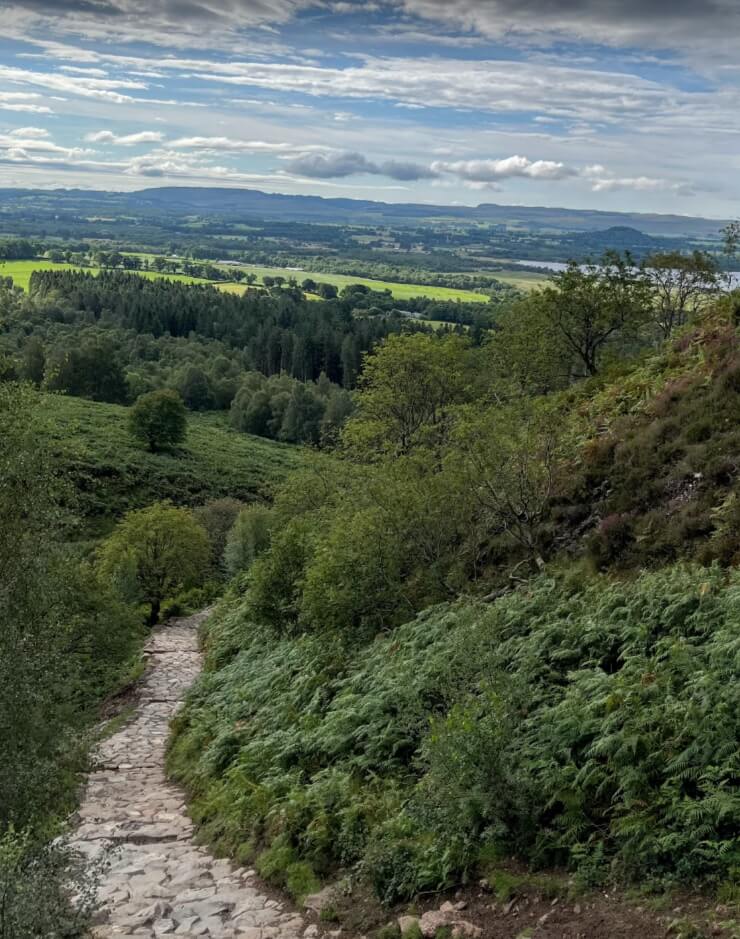
The descent back to the trail was hard on my knees. It wasn't much further before I saw the descent to Balmaha and I knew I was in trouble. The path was clearly new, or recently renovated. It consisted of steps made of rocks of irregular sizes and heights down a very steep mountain side. With my knee already aching, every step was agony. The path eventually led to a dirt trail through a pine forest, which was a welcomed respite. I slowly made my way through a parking lot into the town where I stopped for about 45 mins. I had planned on having a cooked breakfast but I arrived too late for that, so I bought a sandwich, took off my boots and rested. I had completed 8 miles in 3.5 hours, my knee was shot and I had 8 more to go.

The final leg from Balmaha to Rowardennan runs close to the shoreline of Loch Lomond. Sometimes right at the waters edge and at times further inland above the shoreline. The up and downs of the trail was taxing on my knees, with each step down a painful jar to my right knee.

Rowardennan Youth Hostel is located on the shores of Loch Lomond in a beautiful and tranquil location. It took 3hrs to get there from Balmaha, making the total travel time 6.5 hrs. On arrival, I took my boots off and walked into the icy cold water (icy for a Floridian), and I stood there for about 15mins with the water above my knees. I was tired and glad to be done for the day, but I was happy I had done it.

A flyer for a luggage service caught my attention when I entered the lobby. I thought about calling, given the state of my knee after only two days, but decided I would sleep on it. I would make a decision based on how my knee felt in the morning.

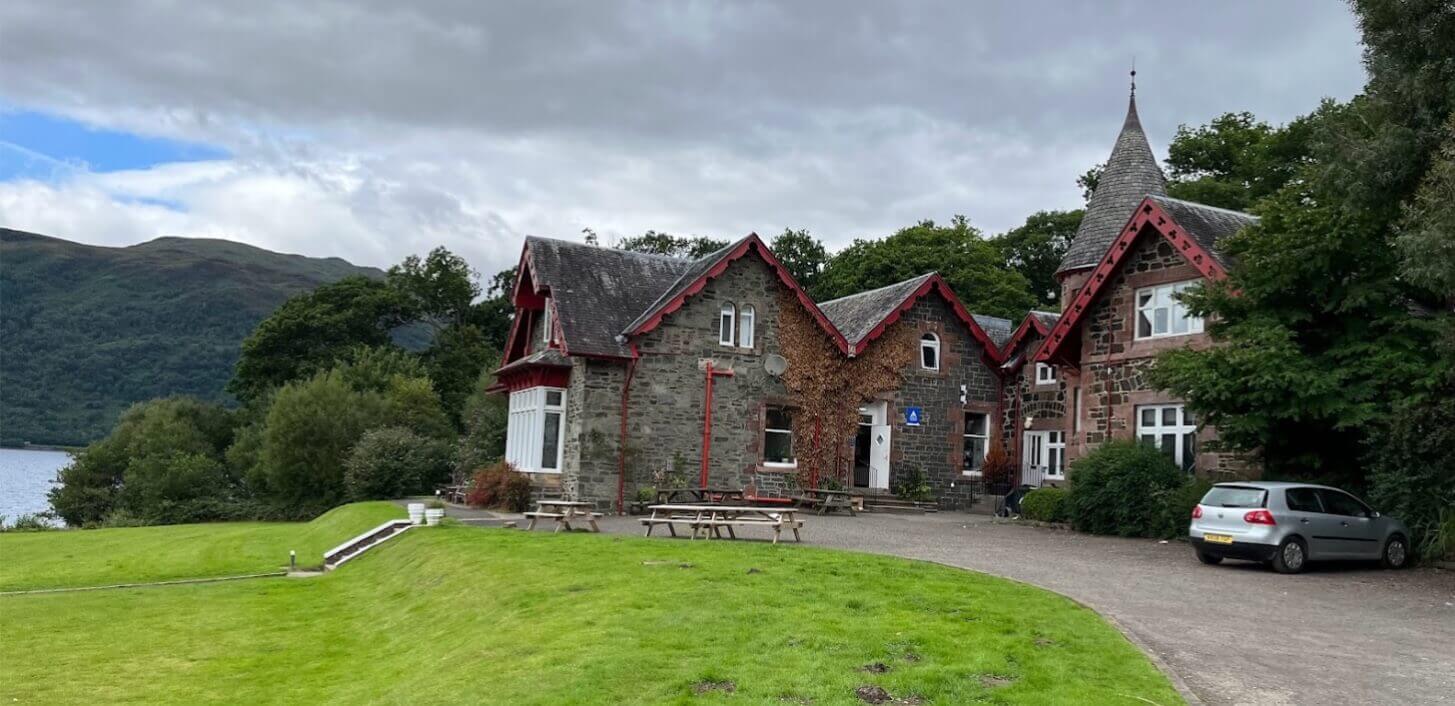
The hostel is positioned a few steps away from Loch Lomond, the largest inland stretch of water in Great Britain. It is a beautiful building surrounded by lush woodlands, hills, and an ideal spot for outdoor adventures or simply unwinding in the peaceful setting, and the tranquility of its surroundings. Its close proximity to Ben Lomond makes it a popular stopping point for both WHW trekkers and those intending to take on Ben Lomond .

click ../images to expand

Day 3
Rowardennan to Inverarnan

Fri Aug 4th | Start Time: 06:57 End Time: 15:34
Forecast: 63°F/44°C - Sunny intervals
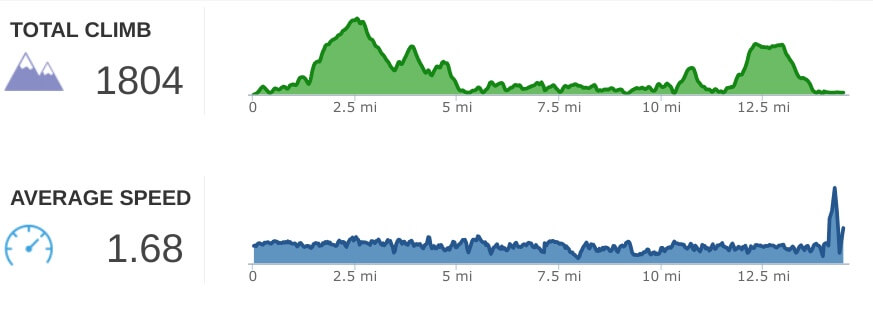
Distance: 14.5miles | Time: 8hrs, 37mins | Speed: 1.68 mph


Day 3 was a beautiful and sunny day and it was by far my toughest day. Most of the sources I read, describes the Devil's Staircase as the toughest part of the walk, but that was not the case for me. The toughest part for me was between Inversnaid and Inveraran.

There is a point between Rowardennan and Inversnaid where the WHW forks into an upper and lower trail. The fork is about a mile from Rowardennan. I had watched a video by a local who walked both paths to show the differences. The lower route closely follows the shoreline of Loch Lomond along a narrow and difficult trail with a lot of elevation changes. Hikers who have walked this path describe it as challenging, requiring close attention to avoid loose rocks, roots and slippery areas. By contrast, the upper route offers an easier alternative. It stays well above the water's edge with gentler elevation changes along a wide track that is not as taxing on your feet. Both routes reconverge about 3 miles from Inversnaid.

Call me a wuss... but knowing that this would be a long day, I opted to take the upper trail. My knee was feeling much better but I knew I still had a long way to go.

I started the day at 6:57am. My knee felt better, so on my way out I entered the telephone number of the baggage service into my phone, just in case I needed it. My plan was to stop at the Invesnaid Hotel to get a good breakfast, but they had stopped serving meals by the time I arrived at 10:15.

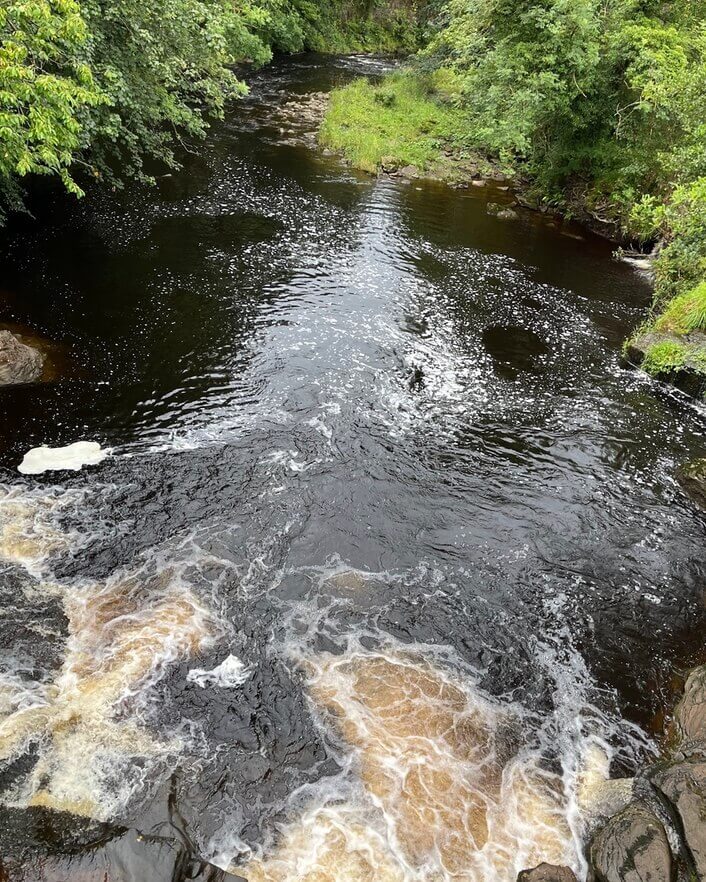
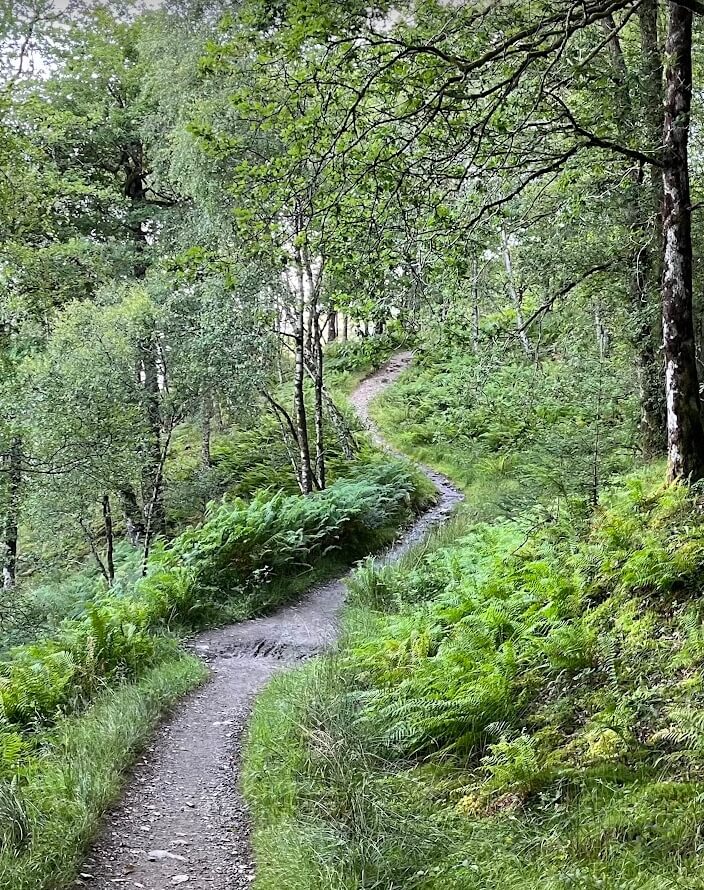
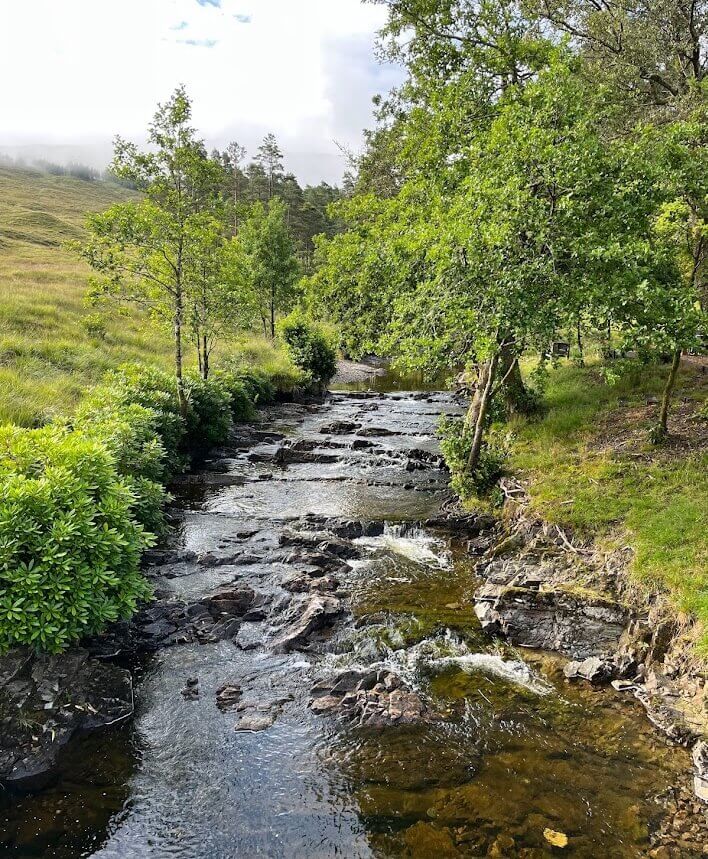
The journey to that point had not been too difficult having chosen to take the upper route. The last stretch of 3 miles from where the two trails meet, was not a cakewalk, but it was manageable. As it approaches the hotel, the trail heads up hill through a serene tree covered area alongside a river, where it crosses above a waterfall to the hotel on the far side.

With the restaurant closed, I opted to continue walking. Little did I know that this section of trail, past the Inversnaid Hotel, is a very similar terrain to the lower trail that I had avoided earlier in the walk, and it was longer. I have since read, after completing the walk, the account of others who took the lower route describe this section as much more difficult.

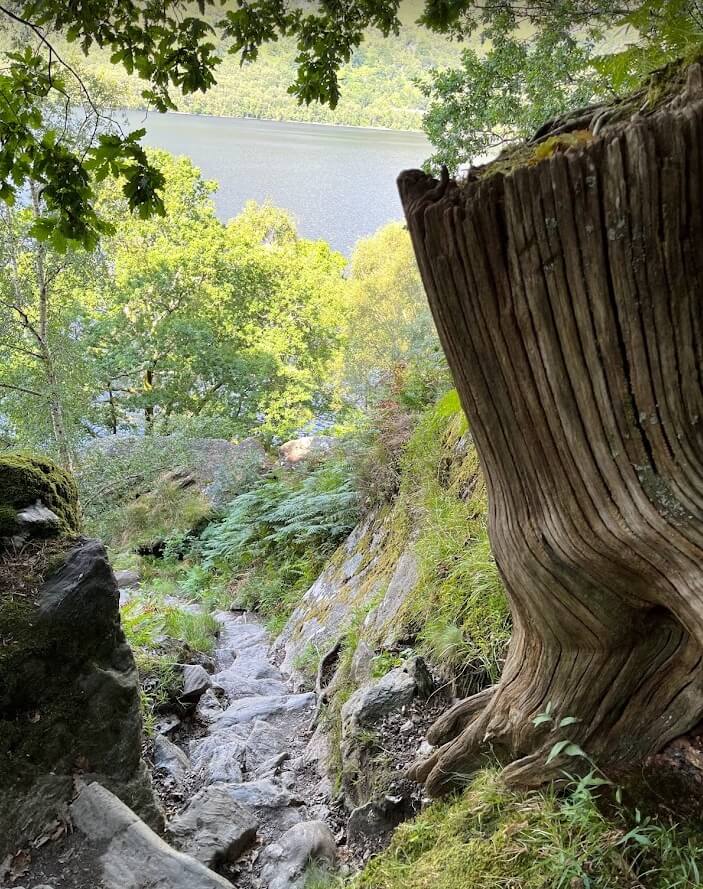
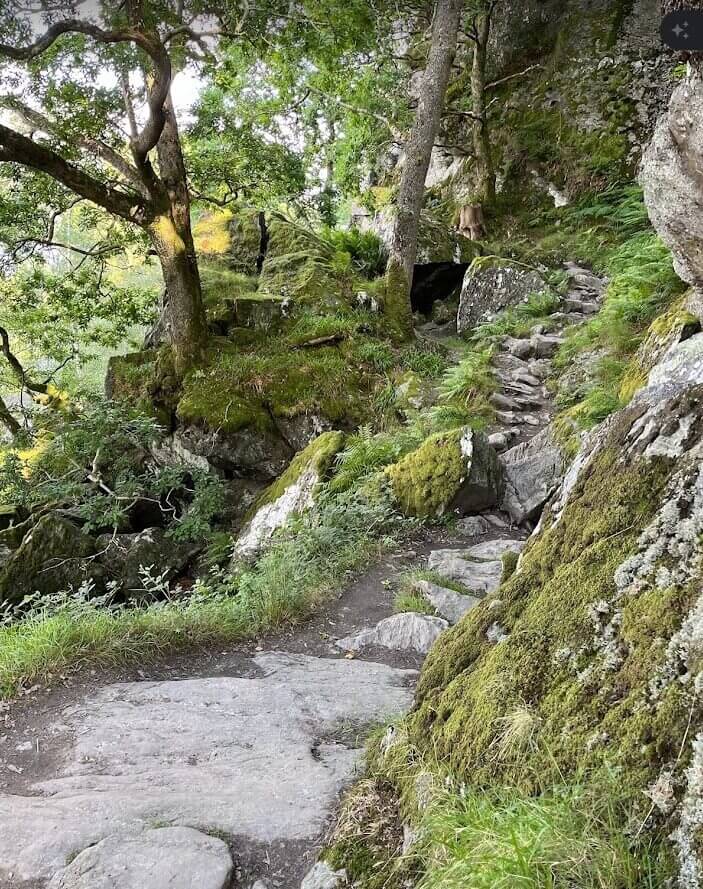
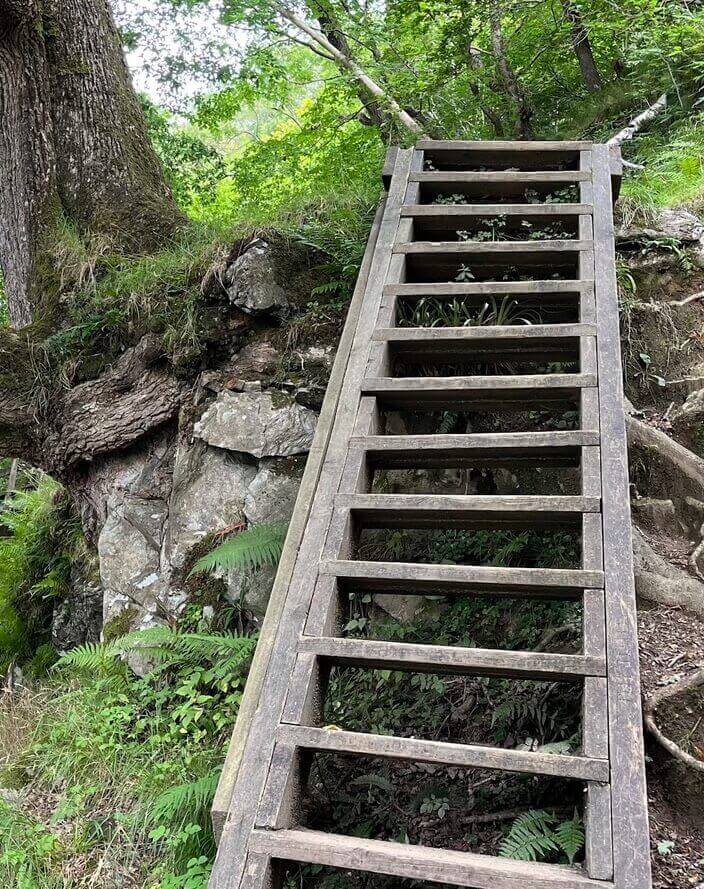
To say this leg was exhausting is an understatement. Its never ending undulation of elevations seemed to go on forever. There are steep and precarious sections of large boulders requiring careful choice of where you place your feet. Knarly knotted roots laid in wait for any errant step. There was a section where the elevation change required a step ladder pictured below... you get the idea. I was mindful the entire time that it would be very easy to twist an ankle, or something worse, if I did not pay attention. My right knee felt close to seizing up and my left had the beginnings of slight pangs of pain. To make matters worse, I had forgotten to top up on water at the hotel Inversnaid, and my reservoir was running low. It had taken me an hour to do 2 miles and I had 5 more ahead of me.

I stopped several times to rest and soak my feet in the cold water of the Loch, which seemed never ending; I had been walking it for 2 days now.

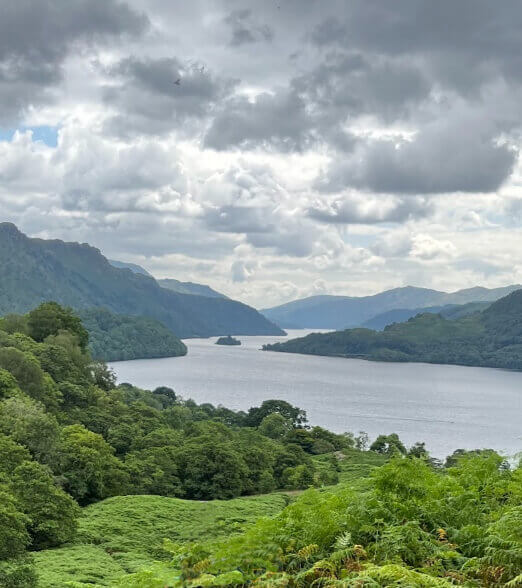
When it did end, the trail began a quick ascent away from the ferry crossing in Ardleish, to the Dario Melaragni mile marker at the top of a hill, where I stopped to rest, and looked back from whence I came... the view was breathtaking (inset picture). I could see most of the 24 miles I had traversed along the shoreline of Loch Lomond. I knew the worst was behind! I only had 2 more miles to go.

The trail continues along the side of a mountain for another mile and a half before beginning the final descent through Beinglas Farm and into Beinglas Campground. The glimpse of the campsite was like a welcoming mirage that appeared at a time when my legs most needed it. I took the last steps with an aching right knee, to the campsite pub, ordered a cider and some french fries and sat outside at a picnic table in the cool fresh air. The food was fantastic and the cider, refreshing. I sat there for close to an hour, observing other trekkers arrive in similar condition.

I telephoned the luggage service and made arrangement for them to pick up my backpack in the morning. They would transport it from Drovers Inn to my next stop, the Bridge of Orchy Hotel. The process was painless and simple. The young lady told me to leave my backpack at the Hotel's designated pickup area. They would pick it up late morning and deliver it before 2pm. I was concerned that I only had the backpack, and had no other bags to carry what I'd need on the trail. My backpack's reservoir was also the source of my water supply. She suggested putting everything I did not need in a garbage bag and travel with the backpack. They would then place the garbage bag into a large laundry bag for transporting.

The whole process was simple, effective and flexible. I had the option to use the service for the rest of the journey (4 days), or only on the days I thought I'd need it, in which case, I'd just call when I wanted it. With that arranged, I set out on the final 1/2 mile off the trail to Drover's Inn.

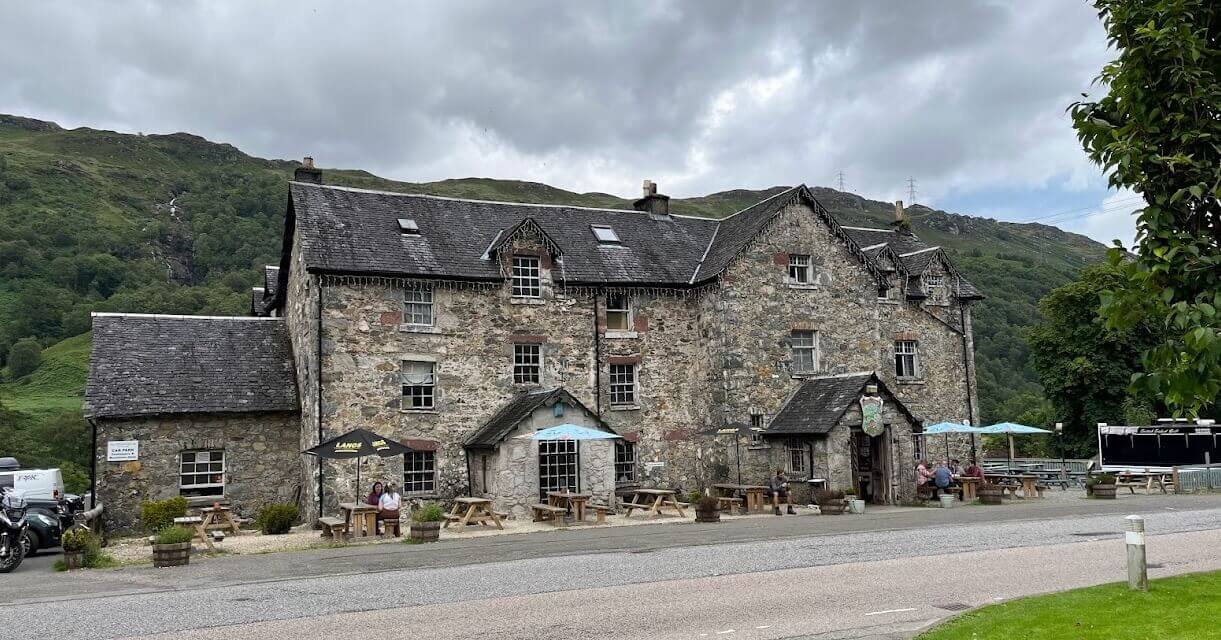
Drover's Inn and Tavern, built in 1848, is located on a busy road that connects Glasgow to the Highlands. I had stayed there before on my first trip to Scotland and have fond memories of the place. It was as I remembered, the atmosphere in the pub and restaurant, lively and informal. It did not disappoint.

click ../images to expand

Day 4
Inverarnan to Bridge of Orchy

Sat Aug 5th | Start Time: 07:03 End Time: 014:36
Forecast: 60°F/47°C - Rain
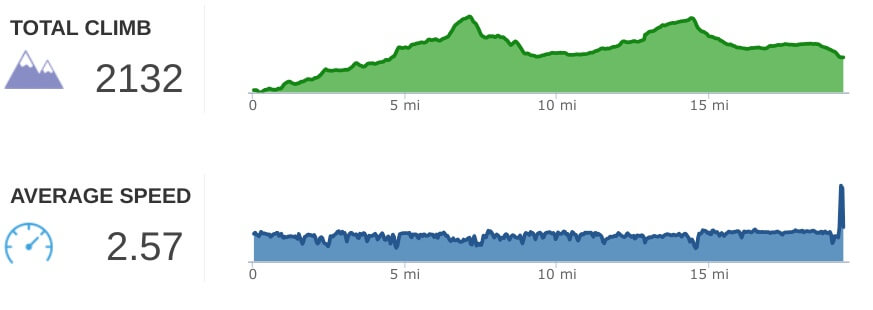
Distance: 19.41miles | Time: 7hrs, 33mins | Speed: 2.57mph


The next morning, I packed everything that I did not need into a bag provided by the hotel and left it in a shed in the back of the hotel. It was an uneasy feeling leaving it all behind, based on the promise of an unknown voice on the end of a single phone call. But, I figured if the Scots are willing to trust strangers to leave payment at an honesty box, they are likely to deliver on their promises.

I started the 1/2 mile walk from Drovers Inn to the trailhead at 07:03am. I had a 20 mile day ahead of me, and it was forecasted to rain. My plan was to break the trip into two segments; a 12.5 mile hike to Tyndrum where I would stop for lunch, then another 7 miles to the Bridge of Orchy.

The crisp air was refreshing as the trail followed the River Falloch for about 4 miles away from the Beinglas camp ground, steadily rising in elevation. The path along the river was beautiful with areas of rocky outcrops, caves and waterfalls. The trail was softer underfoot than the previous day, and the soles of my feet were thankful.

The trail crossed through a tunnel under the main road, leaving the river behind as it began a steady ascent into the mountains above Crianlarich. Most of the walk from that point was at a much higher elevation offering great views of the surrounding area and distant mountains. The path enters a forestry management area perched on the side of a mountain, ascending and descending areas of woodlands of conifers, felled trees and freshly planted saplings. My knees had not fully recovered from the day before so the downhill sections were slow and painful. Climbing was a lot more manageable.

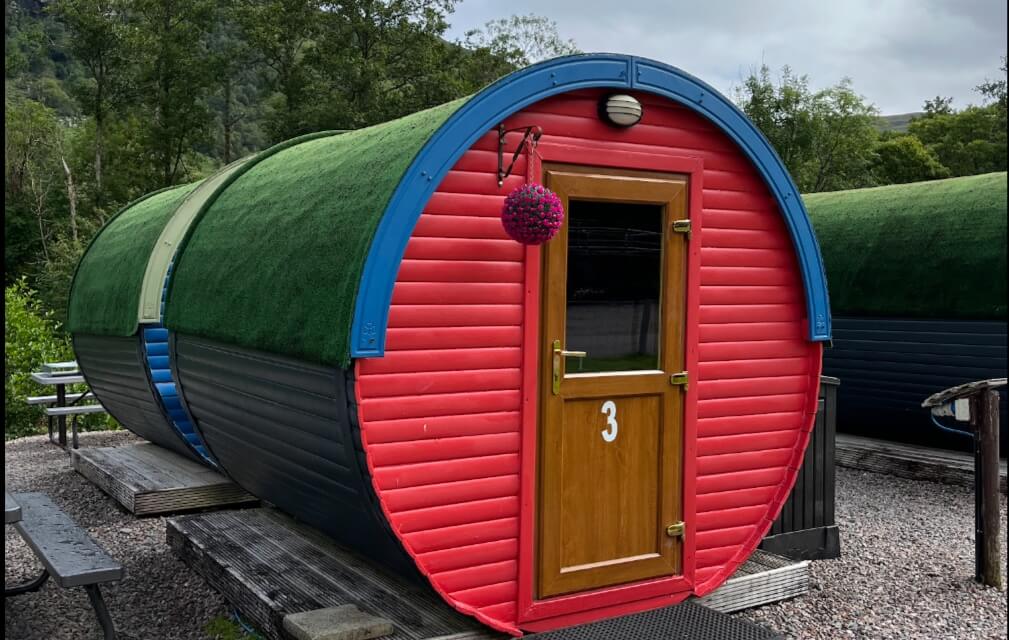
I passed several camping areas with glamping pods as I approached Tyndrum, which was a welcoming sight. It is located at the junction of three major roads in the highland; providing access from Glasgow to Oban and Fort William and beyond. Options for accommodation are more plentiful here; from wild camping to pods and hotels. Unfortunately nothing was available when I booked.

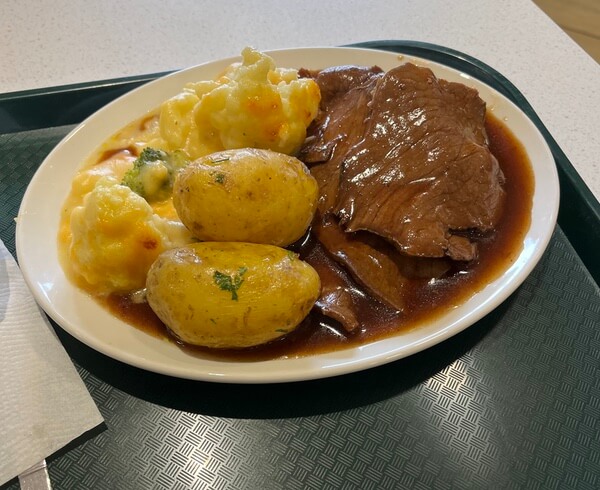
I stopped at the Green Welly for lunch and had a large meal of roast beef and potatoes. It had started to rain by the time I left. The unpredictable weather of the Scottish highlands was a major concern during the planning stage of the walk. I hate the cold. It is one of the reasons why I live in Florida. The rain persisted for the remaining 7 miles to the Bridge of Orchy. I wasn't particularly worried about my knees because I knew the route was mostly flat along an old military road.

Strangely, I loved the rain on this day. I had on a rain jacket with a hoodie. The path was not very strenuous, but it was covered with loose rocks that had begun to pulverize the soles of my feet everytime I stepped on one. It became painful after awhile, so I carefully watched where I stepped.

I found myself getting into a routine about a mile into the walk; a somewhat hypnotic state of one leg in front of the other while marveling at the scenery. I loved the low clouds and mist and how they changed the entire landscape. To the left of the trail, was the main road that runs through Rannoch Moor and Glencoe. The cars were rushing by in a blanket of mist and rain, their headlights like pale orbs, and their wheels churning the wet asphalt into a spray of shimmering diamonds. To the right was the railway for the Glencoe commuter train, a trail of steel, disappearing in the distance. It would be difficult to get lost here, I only had to follow it to find my way to the Bridge of Orchy.

It noticed as I passed the train station that it also served as an overnight hostel for hikers. I thought that was pretty cool, another novel concept. I arrived at the hotel at 2:36pm and my luggage had already been delivered. I decided then and there, that I would be using the luggage service for the rest of the way. The walk took 7 hours and 36 mins.

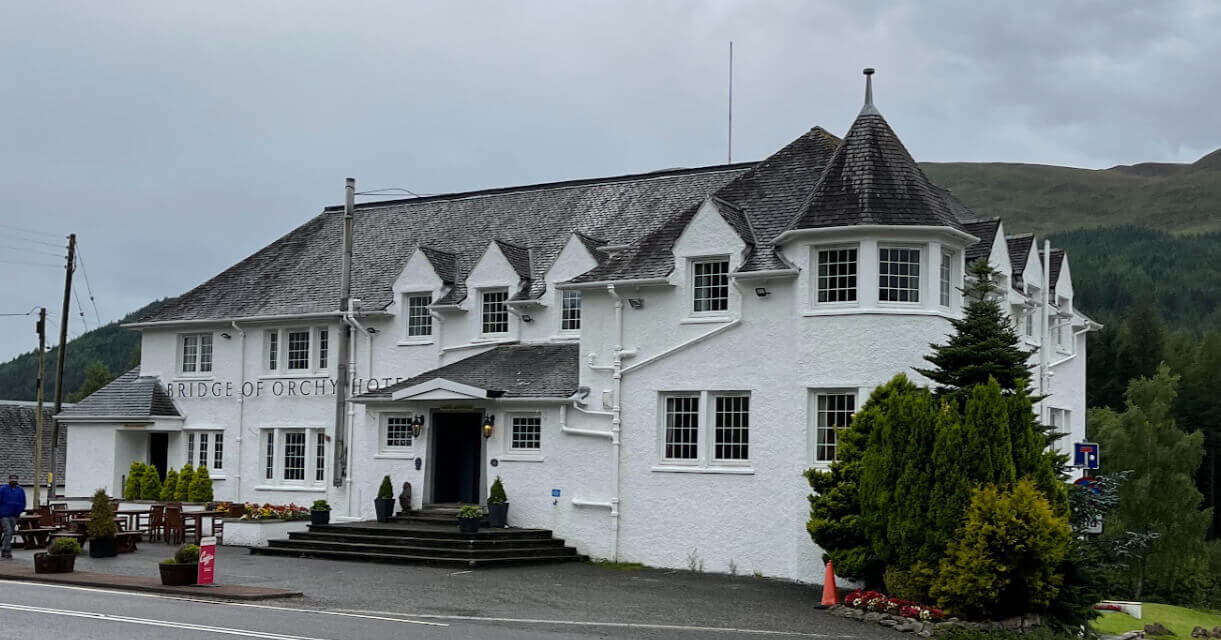
The small village of Bridge of Orchy is located in an area of lush natural beauty, surrounded by rolling hills, rugged mountains, and winding rivers. The falling rain accentuated the peaceful tranquility of its setting. The hotel itself has a warm rustic charm, a cozy interior and a welcoming atmosphere. The pub was lively, an apparent hub for travelers.

click ../images to expand

Day 5
Bridge of Orchy to Kingshouse

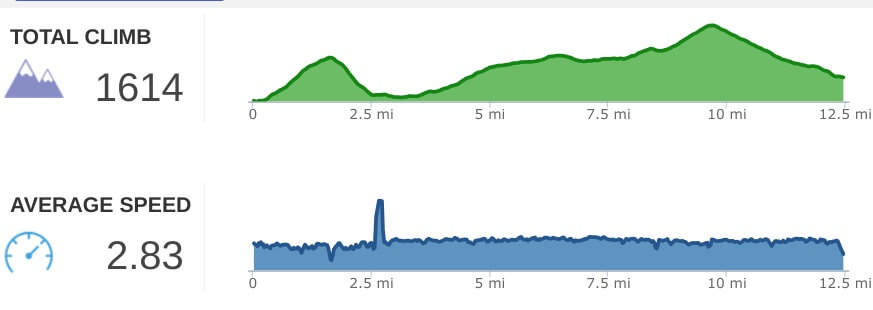
Sun Aug 6th | Start Time: 07:56 End Time: 12:19
Forecast: 57°F/48°C - Light Rain
Distance: 12.46miles | Time: 4hrs, 23mins | Speed: 2.8mph


This was by far my favorite day. The weather was great and the views were spectacular, with vast and constantly changing skies.

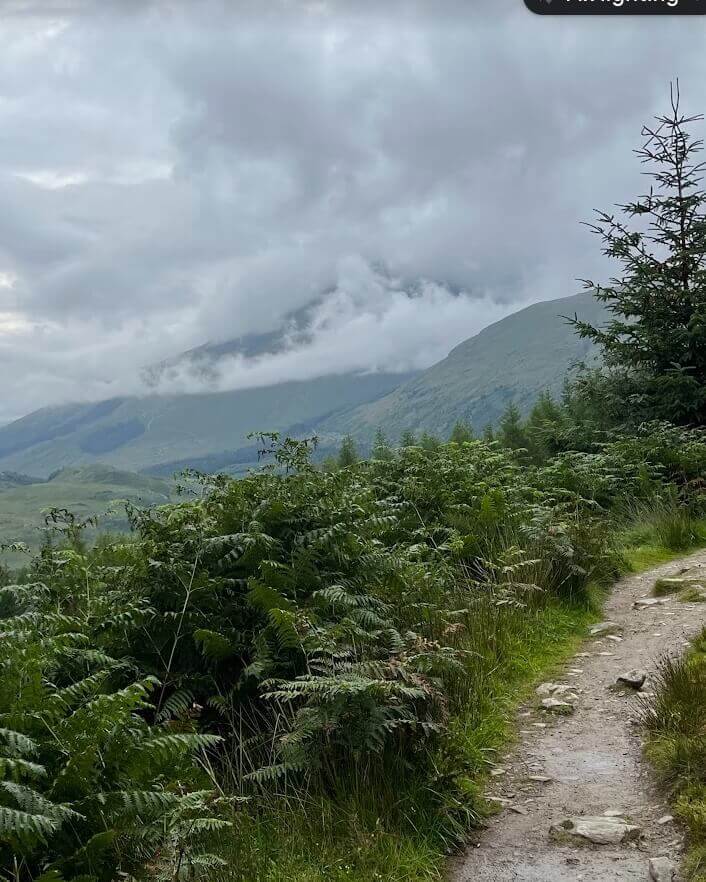
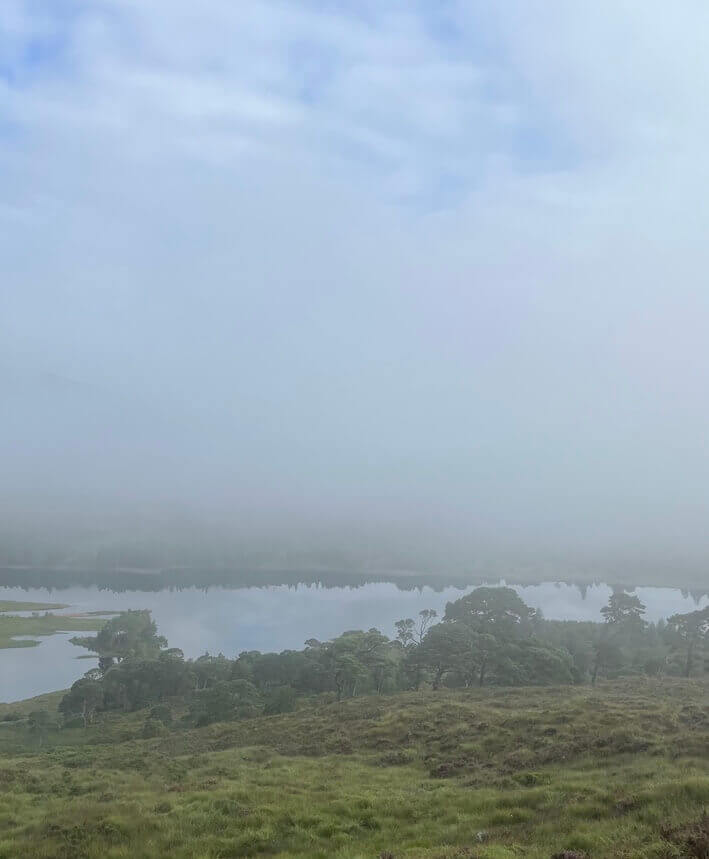
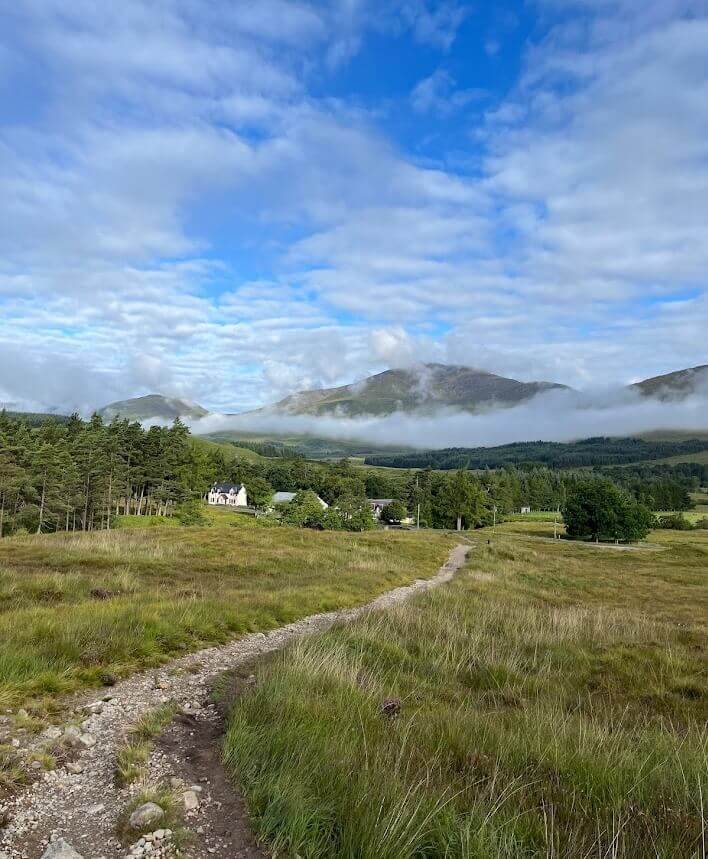
I left the Bridge of Orchy Hotel at about 7am, destined for Kingshouse, about 13 miles away. It was a crisp misty morning and everything was still wet from the previous day's rain. I picked up the trail right outside of the hotel and followed it across the River Orchy, passing an area of wild campers to the back of the hotel where it began a quick and steady ascent towards the top of a mountain. A half mile into my walk, I looked back towards the hotel. It was a beautiful view of the town (photo #1 of group below). There was a low dense cloud that hung behind the hotel beyond a copse of conifers. The edges of the cloud kept rising above the trees eventually dissolving into whispy strands that revealed a translucent view of the mountain behind them. Thin whisps kept rising, reaching for the sky, followed by others breaking away on their own journey towards the sky. It was an introduction to the views that were to come.

I felt invigorated by the cold air tinged with the smell of fresh pine from the surrounding conifer forest. As the trail crested the mountain at 1,056ft, about 1.6 miles in, views of a mist shrouded Loch Tulla began to appear and remained for the majority of the descent into the small hamlet of Inveroran. Further along, situated on a tall mound was a large cairn overlooking Loch Tulla. It was clear that the rocks were added by previous hikers, getting bigger with each stone, so I decided I would add my own. I scrambled to the top with my rock, and this was where I had my first encounter with the midges I had read so much about. It was an experience I was not prepared for. They swarmed around my head entering every orifice they could find. I quickly stumbled down to the trail below, and hastily found and donned my midge net.

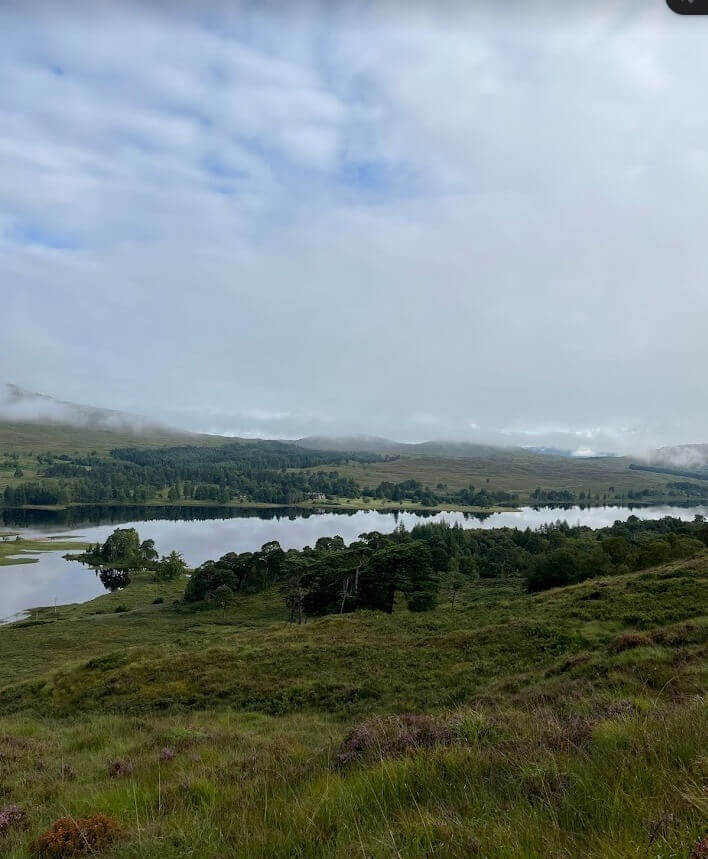
The descent into Inveroran went by quickly. I was preoccupied with the changing vista caused by the swirling and lifting mist. The landscape was constantly changing, sometimes within a matter of seconds, and that is not an exaggeration. At one point, Loch Tulla was veiled in mist, presenting an ethereal scene where the distant bank remained totally obscured, save for the mirrored reflection of its trees. This created a surreal landscape where upside-down trees appeared to be suspended above their right-side-up counterparts in the forefront. The interplay of mist and reflections crafted a mesmerizing and otherworldly vista.

Within a minute, the mist had cleared sufficiently to reveal the far bank filled with trees. I took several photos but they do not do justice to the experience. There is a time stamp of 1 minute between photos 2 and 3 below.

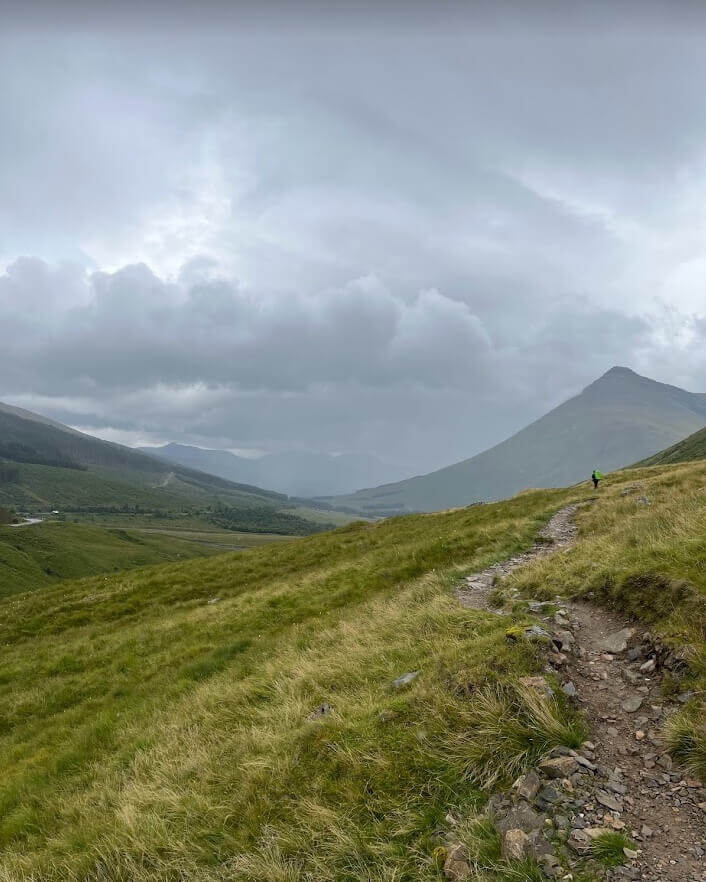
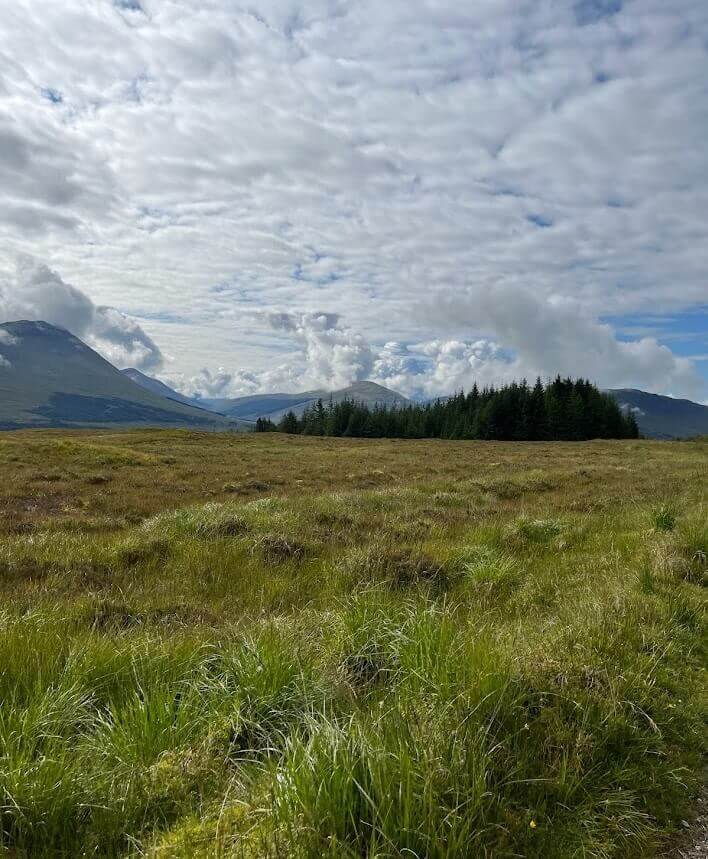
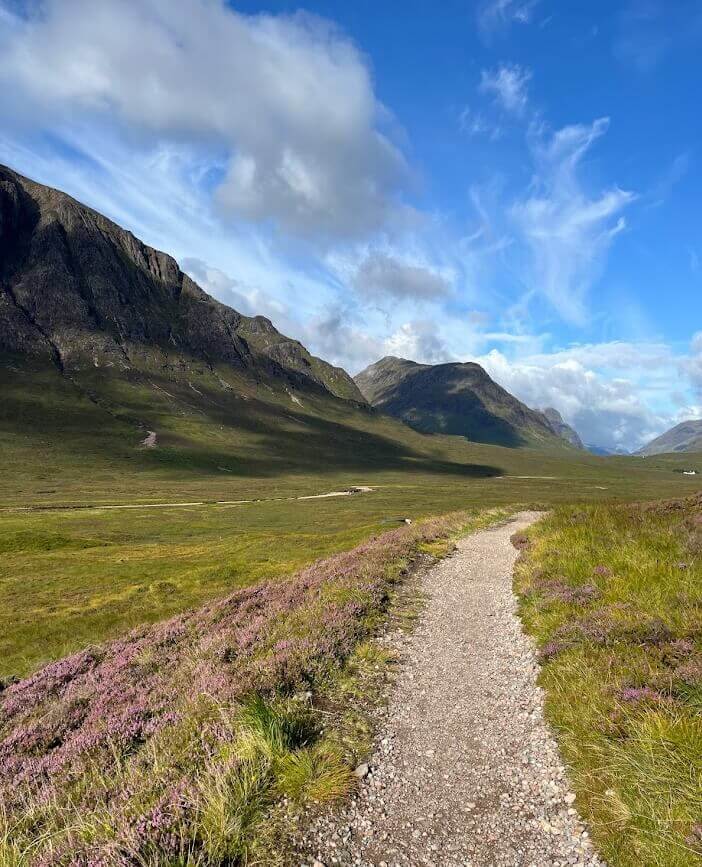
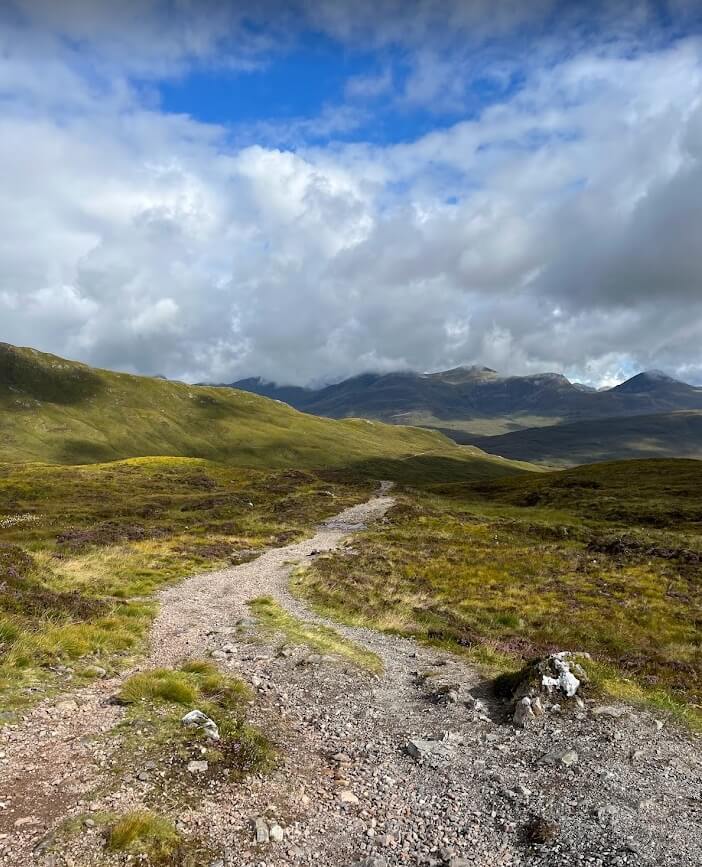
The path is relatively flat between Inveroran and the Victoria Bridge Car Park, where it resumes an ascent from 565ft to 1,462ft over 6.5 miles. The rest of the journey crosses the flat expanse of Rannoch Moor, a breathtaking wilderness. The trail meanders through a mosaic of bogs, heather-covered hills, shimmering rivers, with panoramic views of untouched natural beauty below large and wide skies. The weather here can be unpredictable. My previous drives through the region were always through mist or sudden rain, but I was lucky on this trip... the weather was perfect.

I was surprised by the impact Rannoch Moor had on me. The expansive golden terrain of Rannoch Moor, the peaks of Glen Coe with their steep rock walls carved by ancient glaciers, inspired a sense of awe and humility. I felt dwarfed by their grandeur, with a sense of peace and belonging. I was also mesmerized by the bigness of the skies and the movements of the clouds. Vast stretches of clouds creating a tapestry of constantly changing textures against a blue sky.
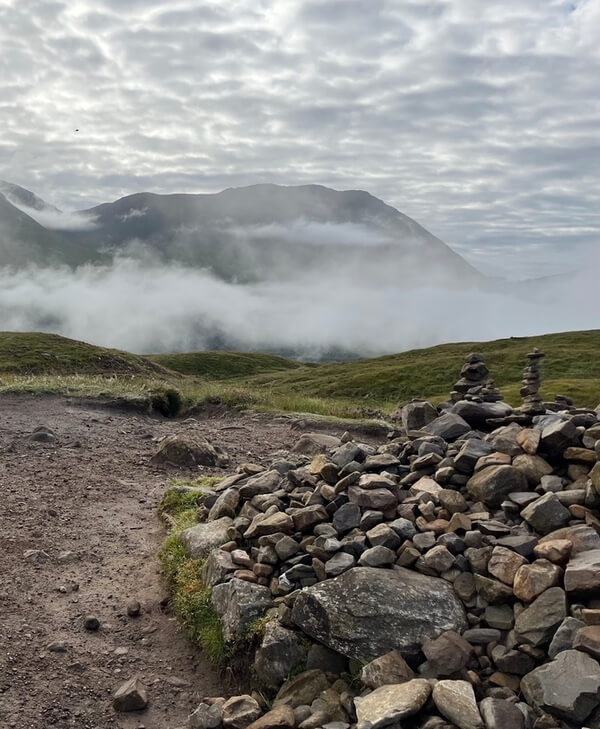
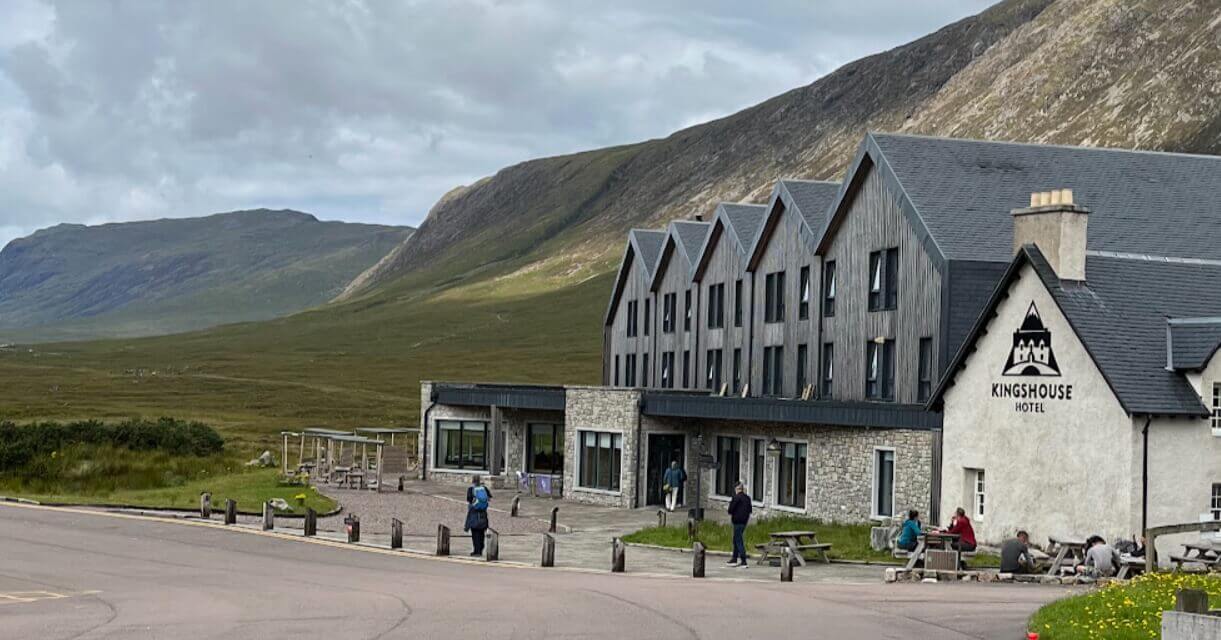
There were many more hikers ranging from young to old, on this leg. I include myself in the latter, but there were others older than me. The trail funnels through Kingshouse, which is located in the moors, making it a hub for hikers from all corners of the globe. I had reservations for the bunkhouse in a room that sleeps 4. The rooms in the main hotel are pricey, over US$400. There is also a wild camp site to the back of the property.
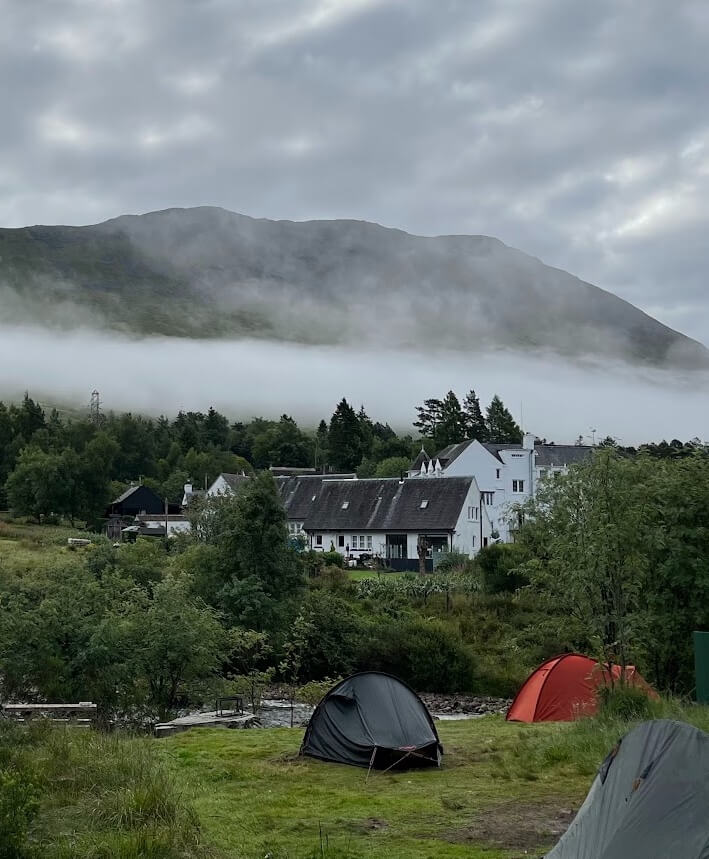
I arrived at Kingshouse just after mid-day and sat outside the pub with a cider, watching as other hikers came in. Some stopped for a bit then traveled on to Kinlochleven, but most stayed at Kingshouse or close by. As the evening wrapped up, the atmosphere in and around the pub became a hive of activity.

click ../images to expand

Day 6
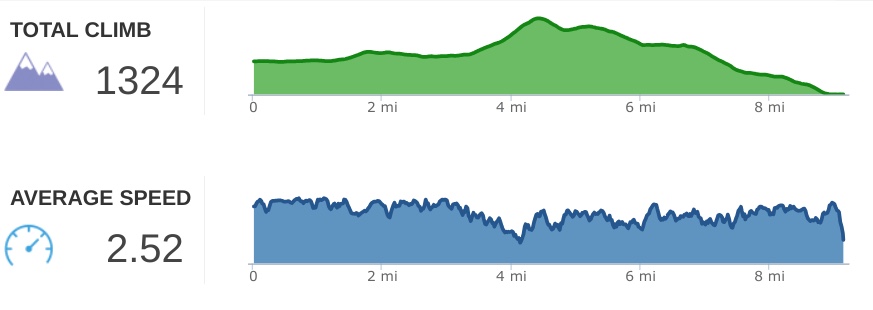
Kingshouse to Kinlochleven

Mon Aug 7th | Start Time: 08:24 End Time: 12:01
Forecast:60°F/48°C - Light Rain
Distance: 9.14miles | Time: 3hrs, 37mins | Speed: 2.52mph


I had a late start, leaving at 8:24. This was the day that caused the most angst during my prep for the walk. It was the day I would face the dreaded Devil's Staircase. I was confident it would not be a problem based on what I learned over the prior days; uphill was a lot easier than going down. But I was anxious nonetheless, it was the descents that wreaked havoc with my right knee.

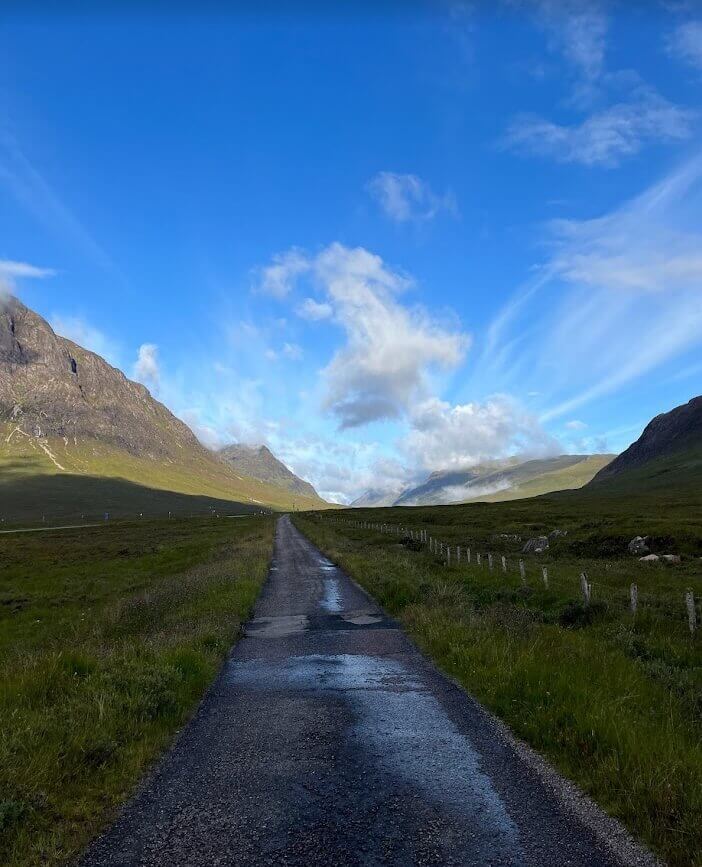
The trail from Kingshouse is relatively flat. It is an old military road that runs parallel to the main road. At about .7 miles in, the trail jogs to the right, moving slightly away from the road. It is easy to miss this turn as I did, preoccupied with the majesty of the rugged Glencoe mountains ahead. I was almost at the road before I realized I had missed the turn, so I doubled back, adding another half mile to the journey.

The trail narrows as it approaches the Devil's Staircase, running right next to the main road for about a mile before turning sharply right to begin the steep climb. There is a sign at the base describing the origins of the Devil's Staircase. The climb is about a mile from the bottom at ~966ft to the top at ~1850ft. The trail, a path of loose rocks and stones, becomes more demanding the more it ascends. It required focus, perseverance and mental fortitude. Mentally, I found it easiest to focus on each step, literally one step at a time out of necessity to avoid injury and also knowing that each step was one step closer to the top. It was an exhausting experience but nothing I felt I couldn't endure. I stopped when I needed to, to catch my breath and enjoy the view behind me.

It took 35 minutes to reach the top. I was dead tired, and overwhelmed by a sense of achievement mingled with awe at the breathtaking panorama. The view from this vantage point, looking back across the route I had taken, encompasses the vast expanse of the Highlands, with the majestic mountains of Glencoe and the moor stretching out below. In the opposite direction, where I was headed, distant mountains filled the horizon, a stark reminder of the miles that lay ahead. Below, them and below my vantage point, the view of Blackwater Dam was captivating, sitting in the valley, a vast body of water surrounded by a carpet of lush green distant trees.

It then dawned on me that the reservoir below me flows into Kinlochleven, which meant the entire path ahead of me was downhill. The remaining five miles was going to be difficult.

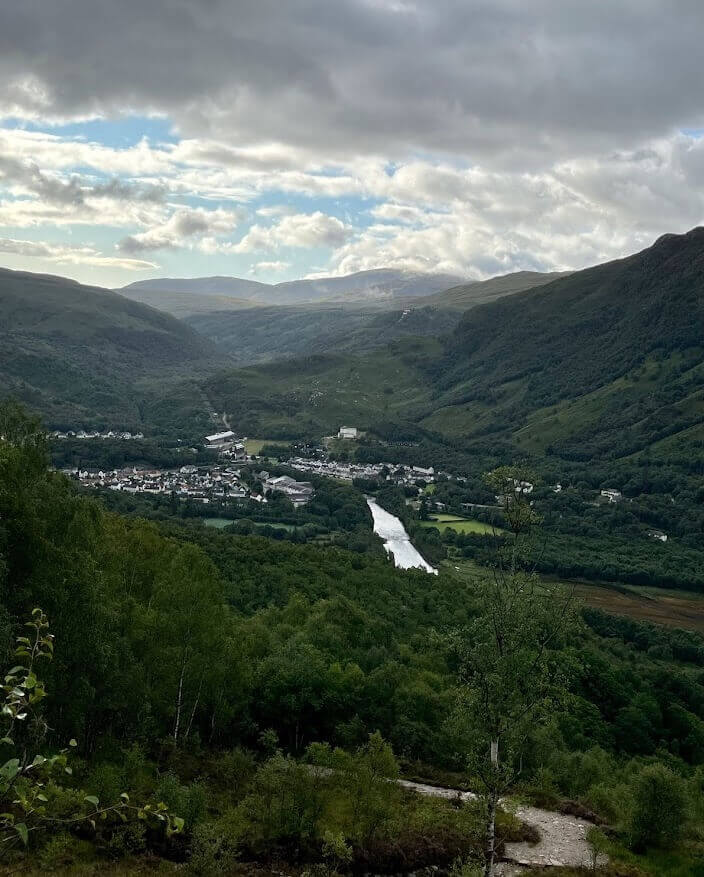
Overall, the walk to Kinlochleven is a scenic descent through woodlands, offering a diversity of views, with glimpses of the village and the tranquil beauty of Loch Leven. The descent is relatively gentle (painful in my case) allowing for a more leisurely pace while still providing captivating views of the surrounding hills and valleys.

The town of Kinlochleven, is situated at the head of Loch Leven. It is surrounded by mountains with the River Leven running through it. It has a charming, intimate feel about it, with its scattering of houses, shops, and local amenities.

I arrived about mid-day, got the keys to my Pod where I would spend the night, then headed to the local Pub. Like Kingshouse, the trail runs right through the town. It wasn't long before people I had met the night before began arriving, and just like the night before, the pub became a center of laughter and chatter, this time less restrained and more like a reunion of friends.

click ../images to expand

Day 7
Kinlochleven to Fort William

Tue Aug 8th | Start Time: 07:32 End Time: 13:25
Forecast: 57°F/47°C - Sunny
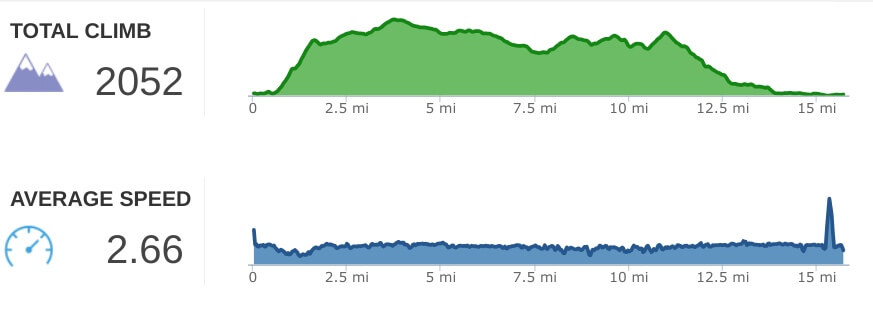
Distance: 15.7miles | Time: 5hrs, 53mins | Speed: 2.66mph


I left my Pod at 7:32 for the final day of walking. I was relieved and in high spirits to have made it this far. The day was to be another long one, 15 miles over high terrain to Fort William, but having made it this far gave me confidence that I would make it.

The path out of the town is steep, ascending ~800ft in about a mile. It's about the same as Devil's Staircase but on much more forgiving terrain that is soft underfoot. The trail joins an old military road about a mile and half into the walk, and stays on it for the next 6 miles. These military roads are mostly wide and flat but covered with loose rocks and stones of various sizes. These loose stones are hard on the soles of your feet. By this point, having done over 80 miles, the soles of my feet felt like they had spent several cycles in a tumble dryer. Every step on a lose stone sent a stabbing pain in the soles of my feet. It felt like walking on a never ending reflexology path.

The military road travels in a valley between mountain ranges, in wide open spaces surrounded by mountains under big skies. I'm not sure how to describe the feeling; it is a fusion of multiple emotions, feeling much closer to the skies, a sense of isolation, an awareness of my smallness, yet feeling connected to the surroundings, of being one with the environment.

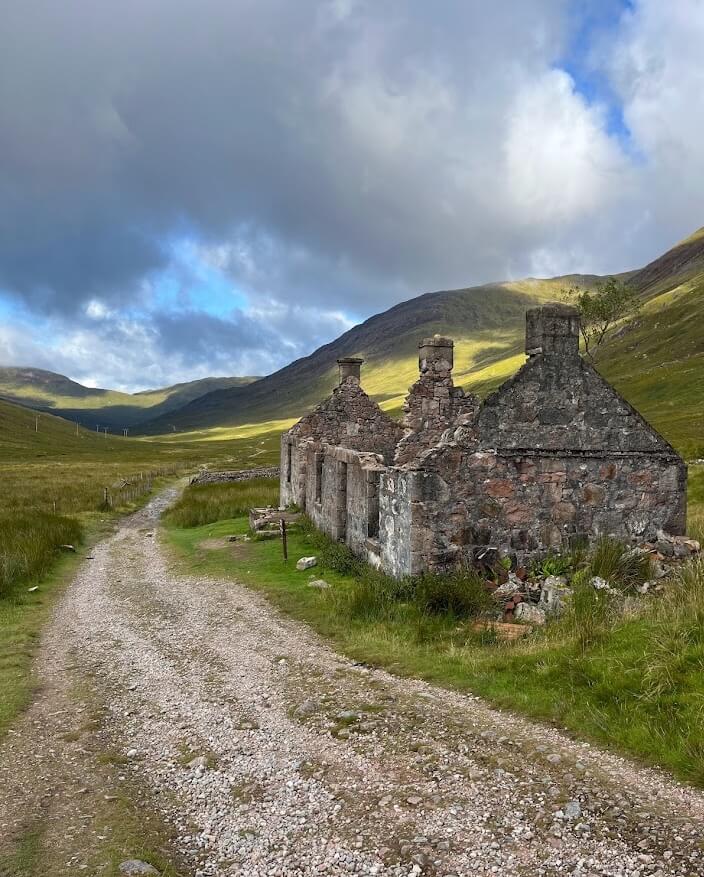
The old cottage ruin (photo #2), at Tigh-na-sleubhaich, a featured landmark in many photos of this leg, is about 4 miles into the walk. The views begin to open up as you approach where the trail diverges from the military road about 7.5 miles in, becoming much narrower with glimpses of Lochan Lunn Da-Brah in the distance to the left, and an increase of vegetation along on the sides of the path.

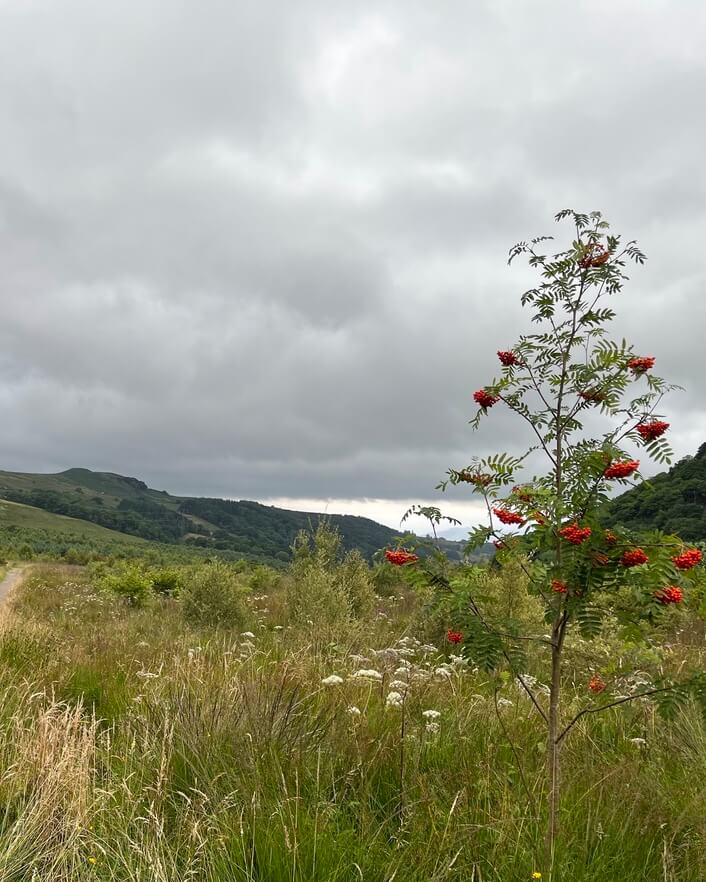
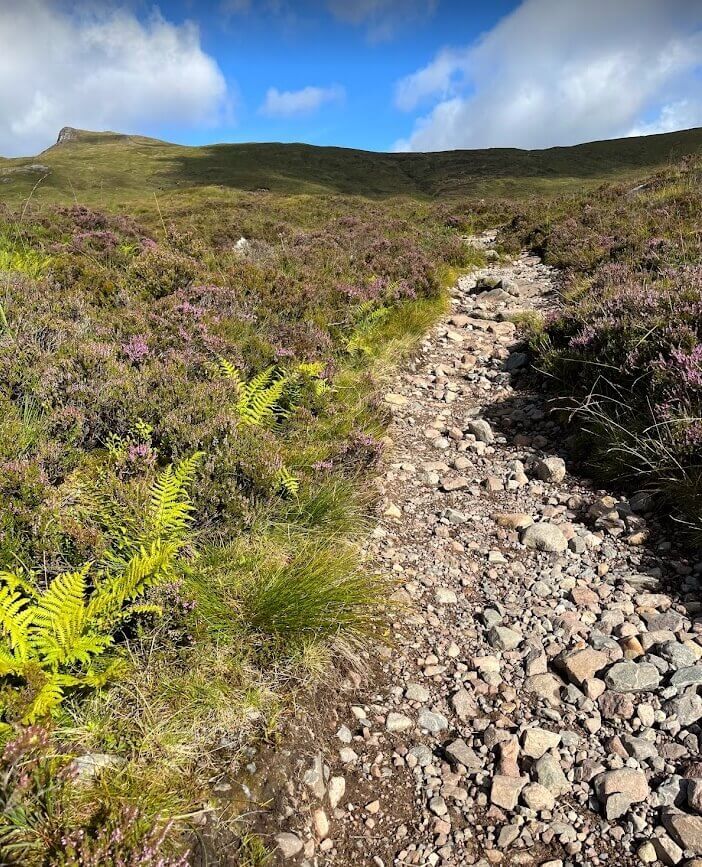
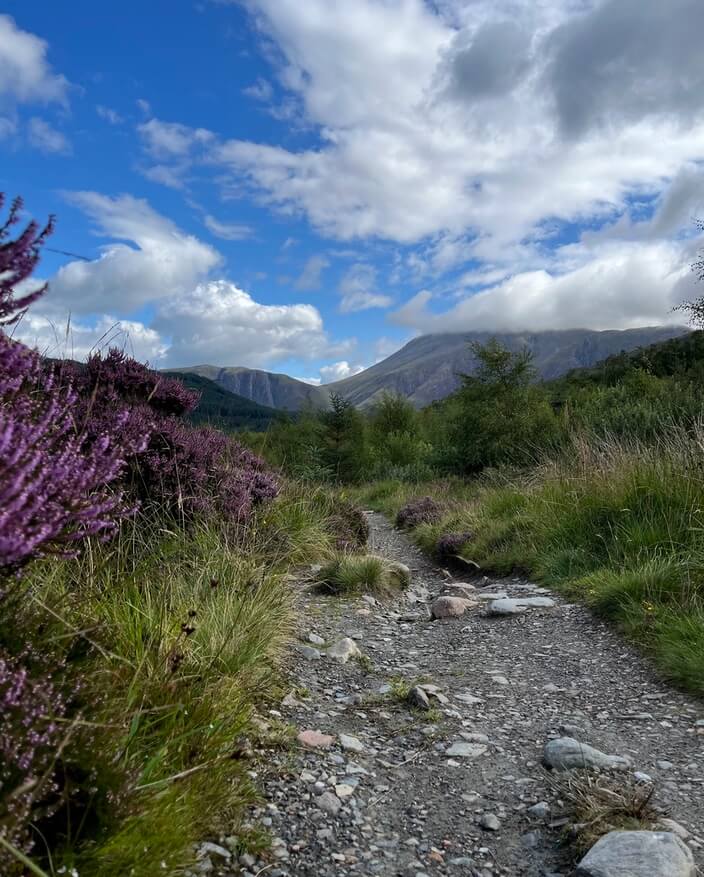
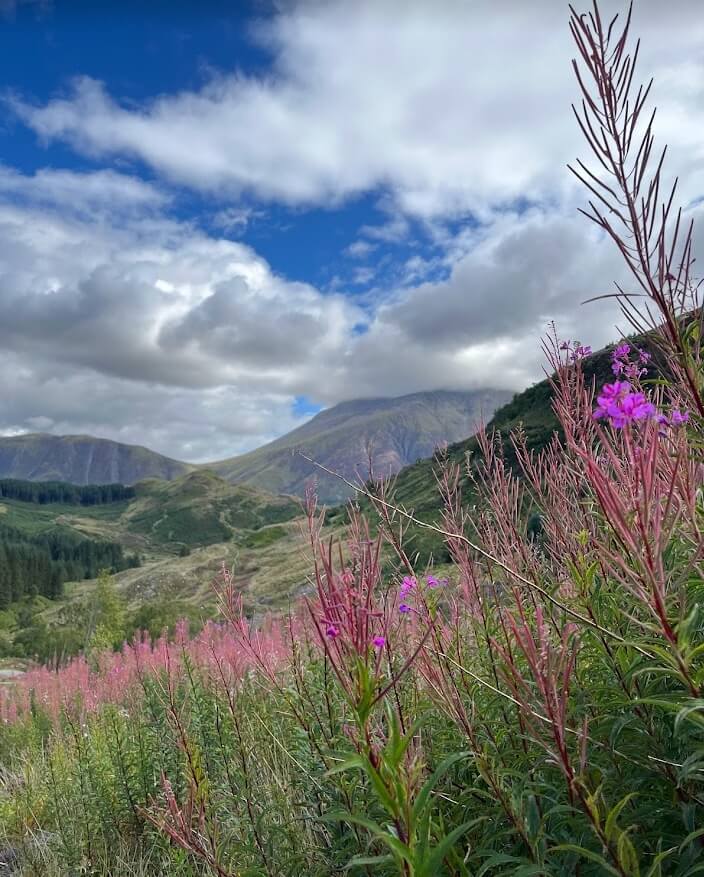
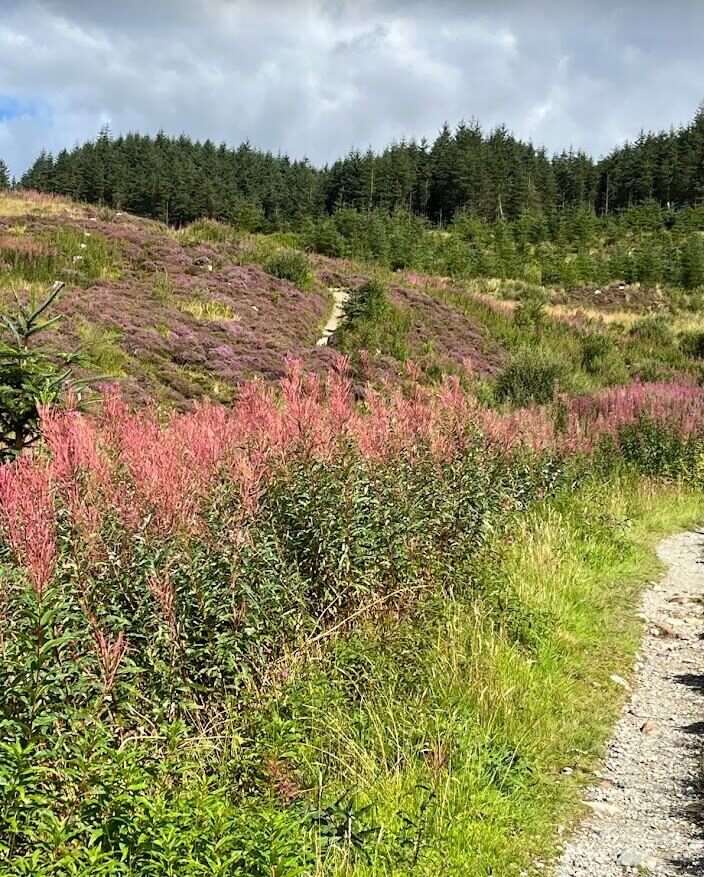
The landscape kept changing as the miles melted away, with large patches of heather with their beautiful purple flowers, and the tall spikes of vibrant pink-purple flowers of the Rosebay willowherb. There were several large areas where these two species intermixed to form a vivid display of color amidst the landscape, adding a striking contrast of greens, pinks and purples against the backdrop of the Ben Nevis mountain range.

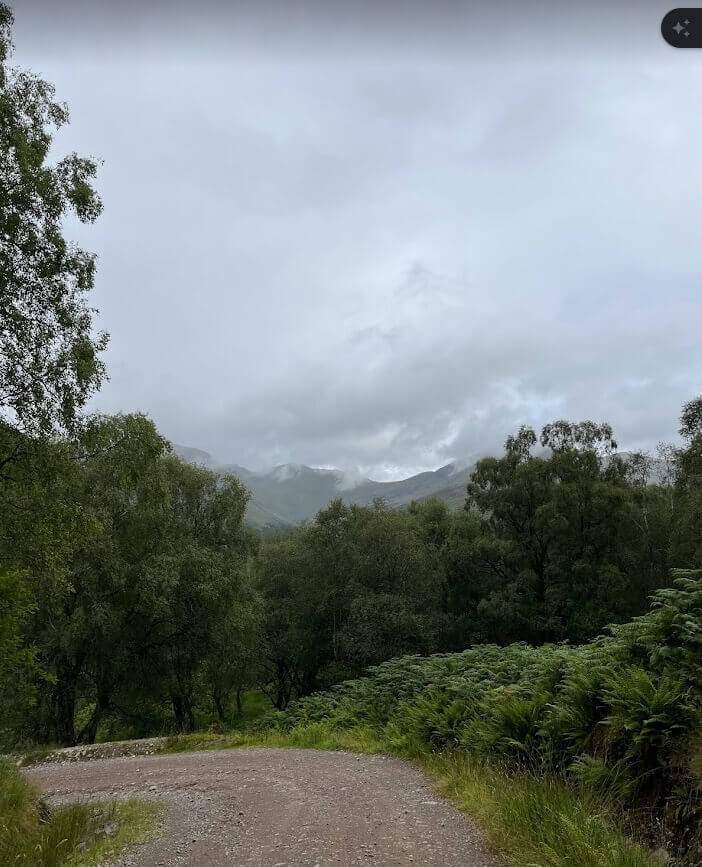
The trail passed through patches of woodlands of ferns, mosses and other undergrowth, creating a more sheltered and diverse environment compared to the more exposed sections earlier in the trail. The number of trees increased as I approached Glen Nevis, becoming more wooded with a mix of trees like birch, oak, and pine, particularly in the lower-lying areas closer to Fort William.

The trail travels through to the Brave Heart Parking lot in Glen Nevis, where I had planned to take the more scenic approach into Fort William via Cowhill. But, this meant taking a trail back up to the mountain that sits just behind Fort William, then a final descent into the town. I decided against it at the last minute and took the official way that runs along the side of the main road leading into Fort William.

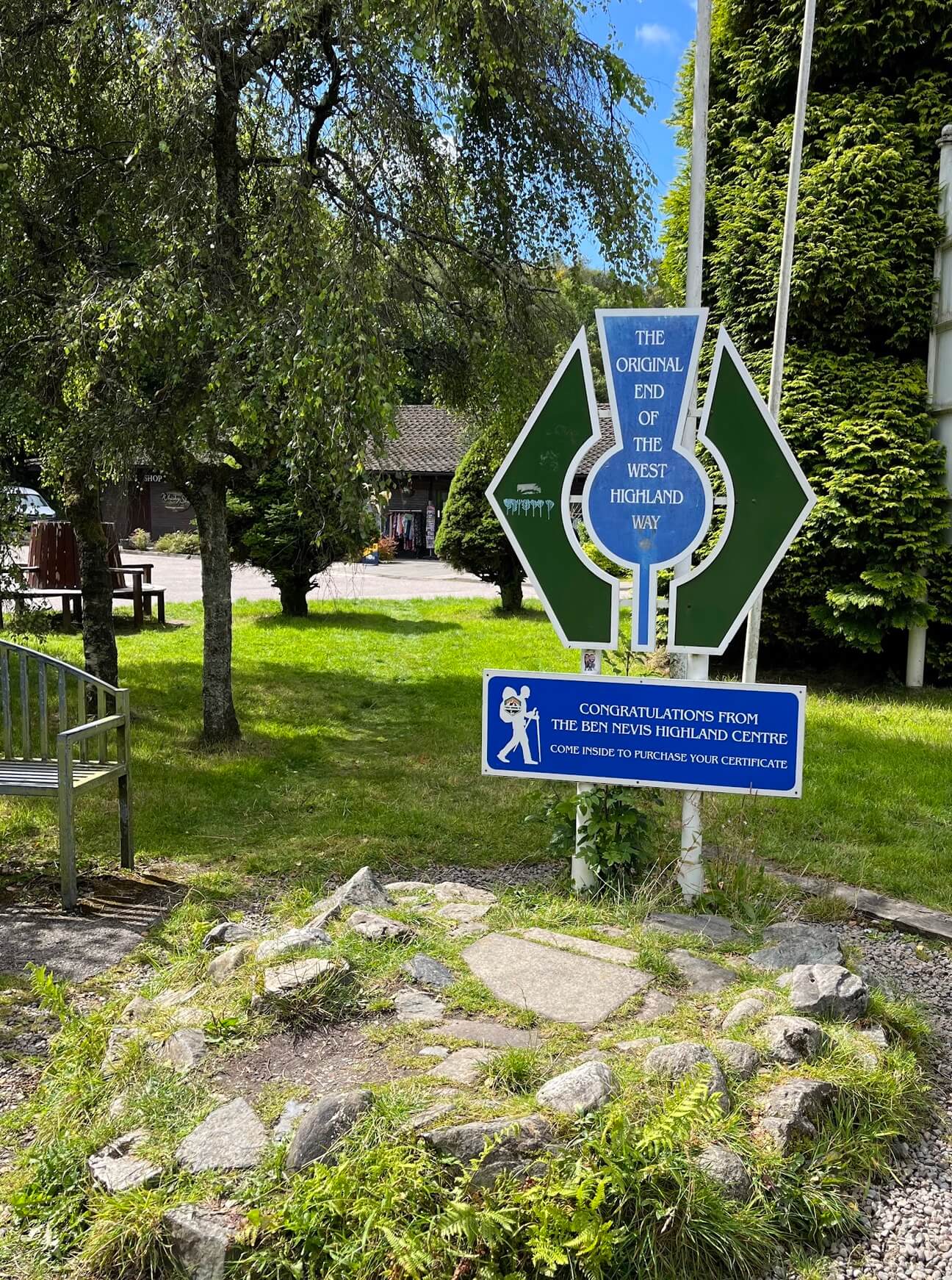
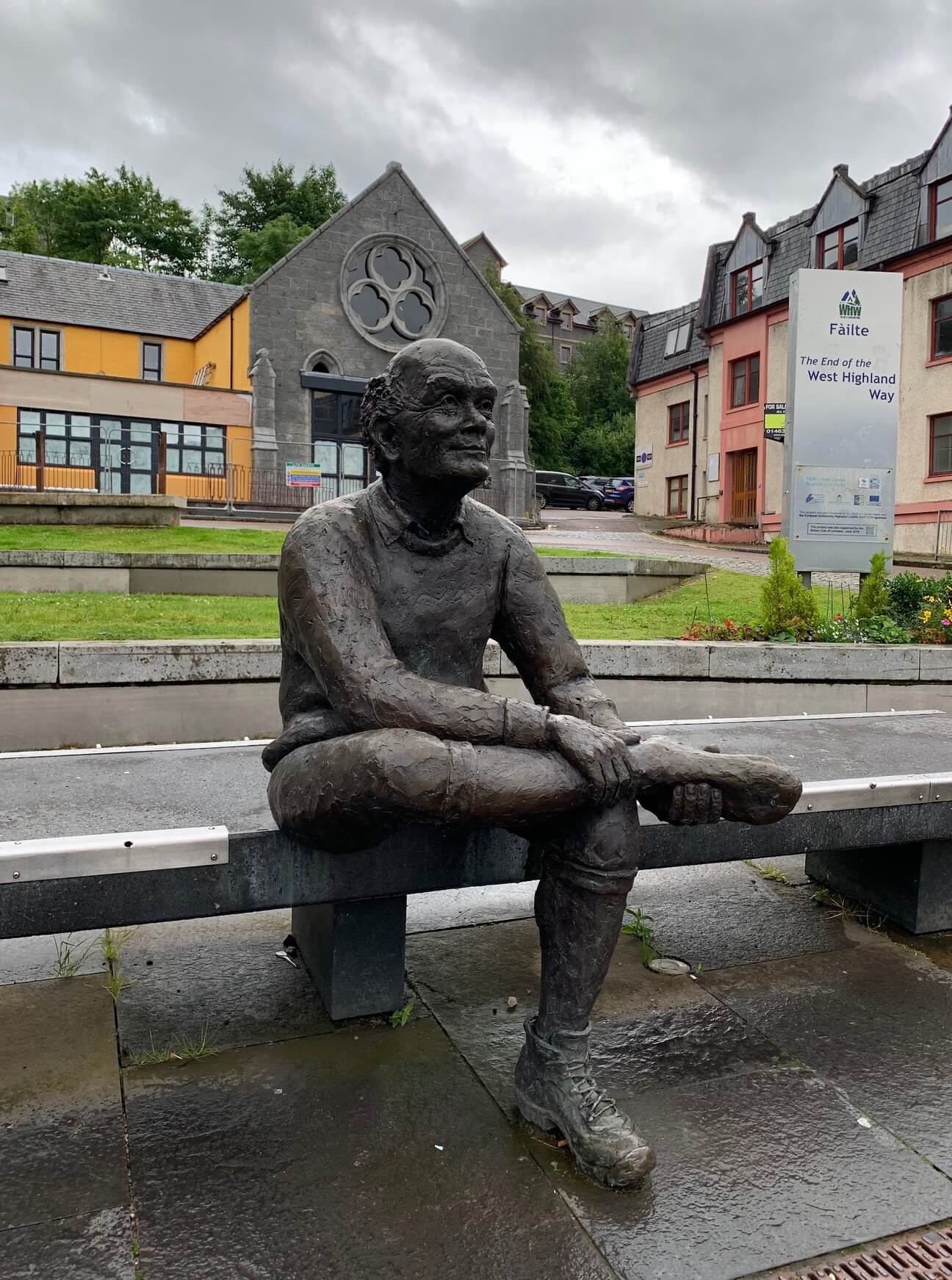
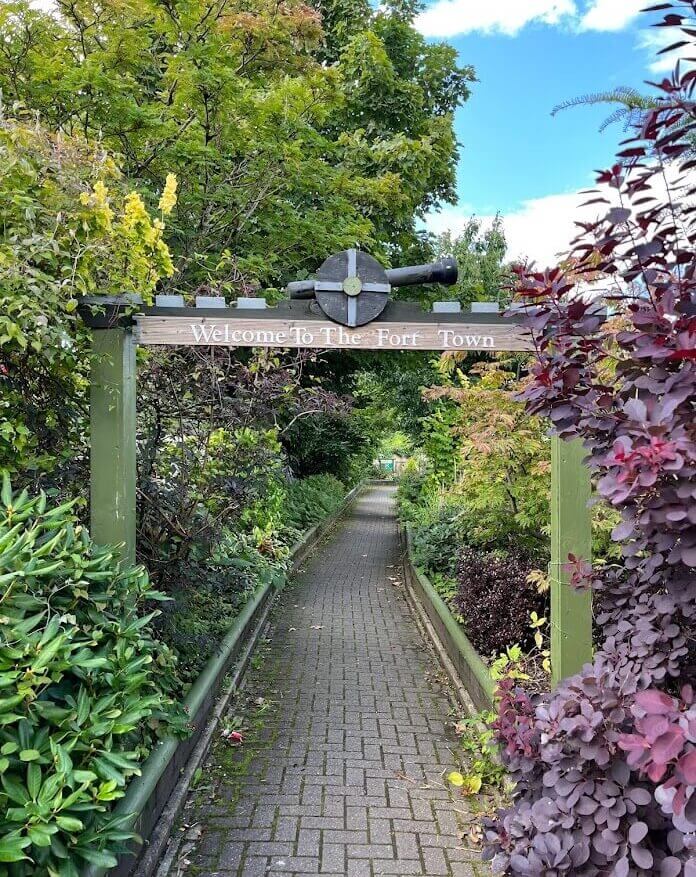
There is a signpost at the entry to the town of Fort William commemorating the original end of the West High Highland Way. In 2010, the official finishing point was moved an additional mile to the main square in the town. A stone statue of a hiker, sitting on a bench and rubbing his sore feet marks the new official end... a very apt depiction. Most hikers take their picture sitting beside this frozen traveller. I honored that tradition, but chose not to subject you to the mugly photograph of the 62 year old who survived the West Highland Way.


click ../images to expand