
West Highland Way
The West Highland Way runs for 96 miles (155 km) from the edge of Glasgow to Fort William at the foot of Ben Nevis. It begins quietly on farm paths and woodland tracks, follows the full sweep of Loch Lomond, then pushes north into open moor and mountain passes. Waymarking is clear, so you’re rarely lost; the challenge comes from distance, weather, and the grind of walking day after day. It’s less about technical skill than steady resilience, and that’s what makes the finish feel so hard-earned.
When to Go & Practical Notes
Pick a season for its trade-offs—light, company, midges, and weather. None is “easy,” just different.
- Spring (Apr–Jun): Long daylight and fewer midges. Nights can bite; trail feels honest rather than harsh.
- Summer (Jul–Aug): Full services and busy paths, plus midges. Beds book out early; patience and repellent required.
- Autumn (Sep–Oct): Quieter, colder, and beautiful. Shorter days mean earlier starts and more time in the wet.
Getting There & Around
Start: Milngavie (≈20 min by frequent train from Glasgow). Cafés, supermarkets, and outdoor shops sit right by the obelisk starting point.
Finish: Fort William for onward trains/buses and links to the Isles. Many walkers add a rest day or a Ben Nevis ascent if weather allows.
Difficulty & Terrain
The West Highland Way is easy to follow, but far from easy to finish. Its challenge is in the miles, the weather, and the sheer grind of walking day after day. South of Tyndrum the paths are steadier and villages break the effort into manageable pieces, but the northern half asks more of you.
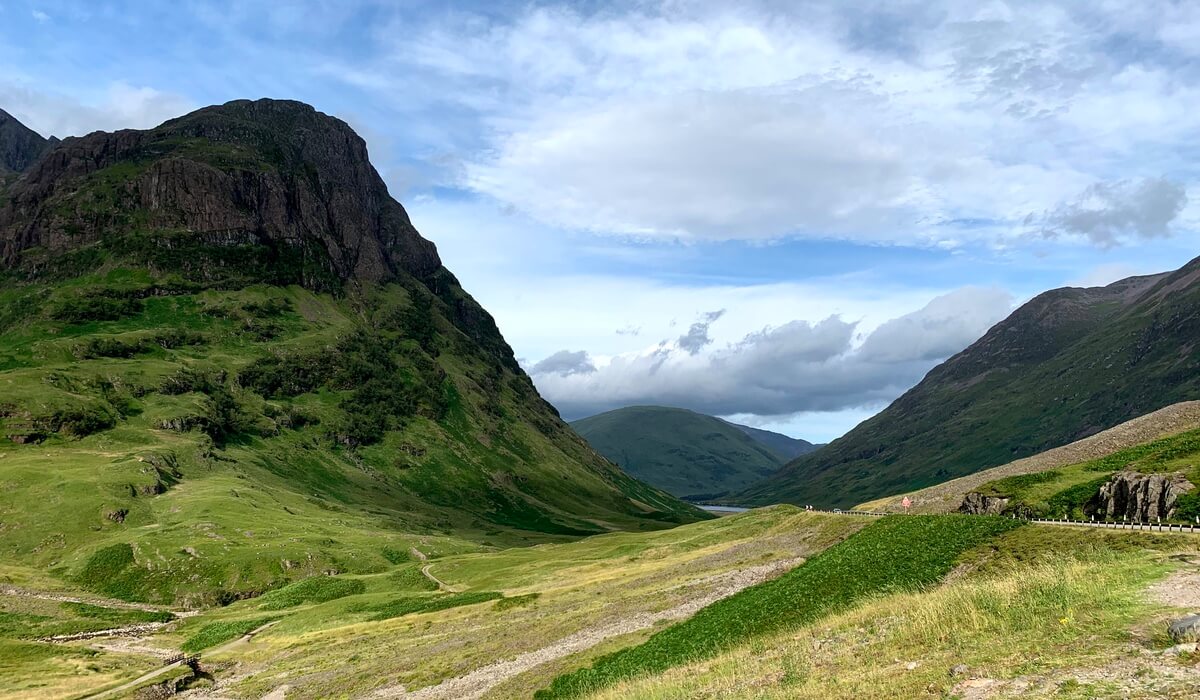
The stretch along the east shore of Loch Lomond is notorious. On a map it looks modest; on the ground it is a punishing obstacle course of roots, boulders, and constant ups and downs. It saps energy and slows progress, often turning into the longest-feeling day of the walk. Beyond that lies Rannoch Moor, wide and exposed, where there is no shelter if the rain or wind comes in. And just before the end, the Devil’s Staircase climbs steeply above Glencoe at the very point when most walkers are already exhausted. The climb is hard, but the descent into Kinlochleven can be worse—long, rough, and unrelenting, punishing tired knees with every step. None of these sections is impossible, but taken together they demand stamina, patience, and persistence—one step at a time until Fort William is finally under your boots.
Elevation at a Glance

Accommodation & Logistics
Places to sleep are fairly regular south of Tyndrum, but farther north they thin out and must be booked well in advance. Options range from campsites and bunkhouses to inns and B&Bs, and many walkers use a baggage-transfer service so they don’t have to carry a full pack each day.
You can only buy food in a few villages along the route — Drymen, Balmaha, Tyndrum, and Kinlochleven. Between those points there are no shops, so you need to carry enough meals and snacks to get you through. Water is usually available, but it’s best to carry extra and have purification tablets or a filter as backup.
Keep in mind that the official 96 miles only measures the trail itself. In practice you will walk more, because lodgings are rarely right on the path. Sometimes it’s just a short detour; other times, like Drymen, it can add several extra miles by the time you’ve gone off-route in the evening and returned to the trail the next morning. Factor this into your planning so the real effort doesn’t take you by surprise.
Mobile reception is unreliable once you leave the villages, especially across Rannoch Moor. Download maps to your phone before you start, and carry a paper map as well. The trail is well signposted, but bad weather or fatigue can make navigation harder than you expect.
Route Breakdown
| Section | Distance | Est. Time |
|---|---|---|
| Milngavie → Drymen | 12mi / 19km | 4–5hrs |
| Drymen → Balmaha (via Conic Hill) | 7mi / 11km | 3hrs |
| Balmaha → Rowardennan | 7mi / 11km | 3hrs |
| Rowardennan → Inverarnan | 14mi / 22km | 6–7hrs |
| Inverarnan → Tyndrum | 13mi / 21km | 5–6hrs |
| Tyndrum → Inveroran | 9mi / 14km | 3–4hrs |
| Inveroran → Kingshouse (Rannoch Moor) | 10mi / 16km | 4–5hrs |
| Kingshouse → Kinlochleven (Devil’s Staircase) | 9mi / 14km | 4–5hrs |
| Kinlochleven → Fort William | 16mi / 25km | 6–7hrs |
Trail Highlights
Every stage of the West Highland Way has its own character. These are the moments most walkers remember long after the blisters fade:
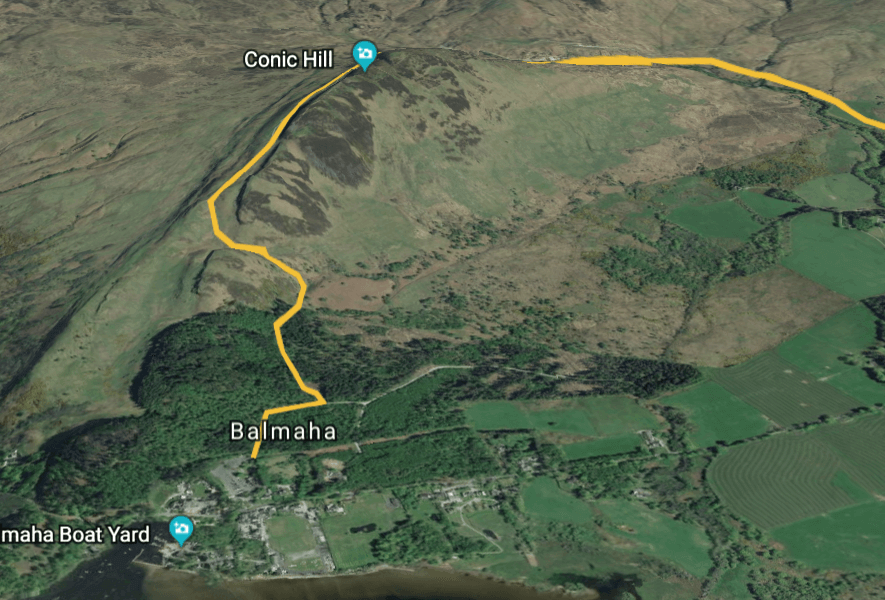
- Conic Hill: The first real climb of the trail, just before Balmaha. From the top you see Loch Lomond spread out with its scatter of islands — a view that stays with you. The climb is short, but the steep descent can be harder on the knees than the way up.
- Loch Lomond’s east shore: Beautiful but demanding. The path twists constantly over roots, rocks, and short climbs. It feels far longer than the map suggests and is often remembered as the most exhausting stretch of the walk.
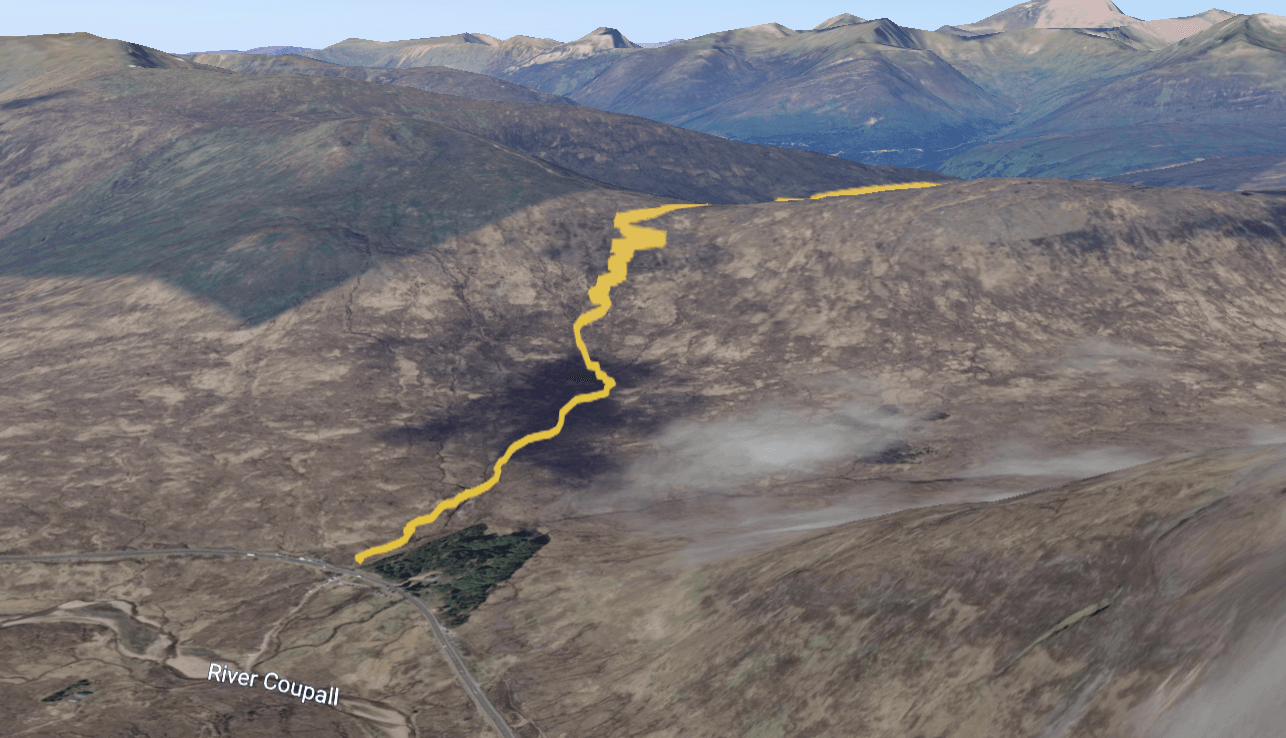
- Rannoch Moor: A wide, open expanse where the trail runs for miles with no buildings, no shelter, and nothing but sky, bog, and weather. In sunshine it is spectacular; in rain and wind it can be brutal.
- The Devil’s Staircase: A steep zig-zag climb above Glencoe. By this stage most walkers are tired, and the climb feels relentless. The reward is a sweeping view of the surrounding peaks before the long, rough descent into Kinlochleven.
- Final approach to Fort William: The last miles are less scenic, following forestry tracks into town, but the sense of achievement is huge. Tired, sore, and proud, most walkers head straight for food, drink, and a chair — the real reward after nearly a hundred miles.
Final Tips
The West Highland Way will test you as much as it rewards you. Walk north to let the landscape build with each stage. Start earlier than you think you need to, because the weather turns quickly and the hardest miles often come late in the day. Protect your knees on the descents, tape hot spots before they become blisters, and never underestimate how far “just one more mile” can feel when you’re already tired. Carry food and water for the long gaps, keep your rain jacket close to hand, and remember that every step — uphill, downhill, and the extra detours to your bed each night — is part of the journey. This is not a stroll but a sustained effort, and finishing it is something to be proud of.
If you’d like to know what it really feels like to walk it — the aches, surprises, and small triumphs along the way — see this personal account:
Tackling the West Highland Way at 62, I must be crazy